Quick answer: Reputation management services are ongoing, expert-led programs that monitor, respond to, and shape what people find about your business online. They combine review management, sentiment analysis, content, and SEO into one strategy so a handful of bad reviews or an old news story doesn’t get to decide how customers see you.
A single bad week can undo years of good work. One viral complaint, one slow response to a health inspection report, one ex-employee with an axe to grind and suddenly that’s the first thing people see when they search your name.
That’s not a small business problem or a big enterprise problem. It’s everyone’s problem. Most shoppers check more than one review site before they buy, and plenty of them won’t go near a business with an average rating under three stars. Your reputation isn’t just a nice-to-have anymore; it’s a revenue line.
Reputation management services close this gap by protecting and strengthening your brand. In this guide, we’ll walk through what these services actually include, what they cost, how to pick the right partner, and where most businesses go wrong when they try to handle it alone.
What Are Reputation Management Services?
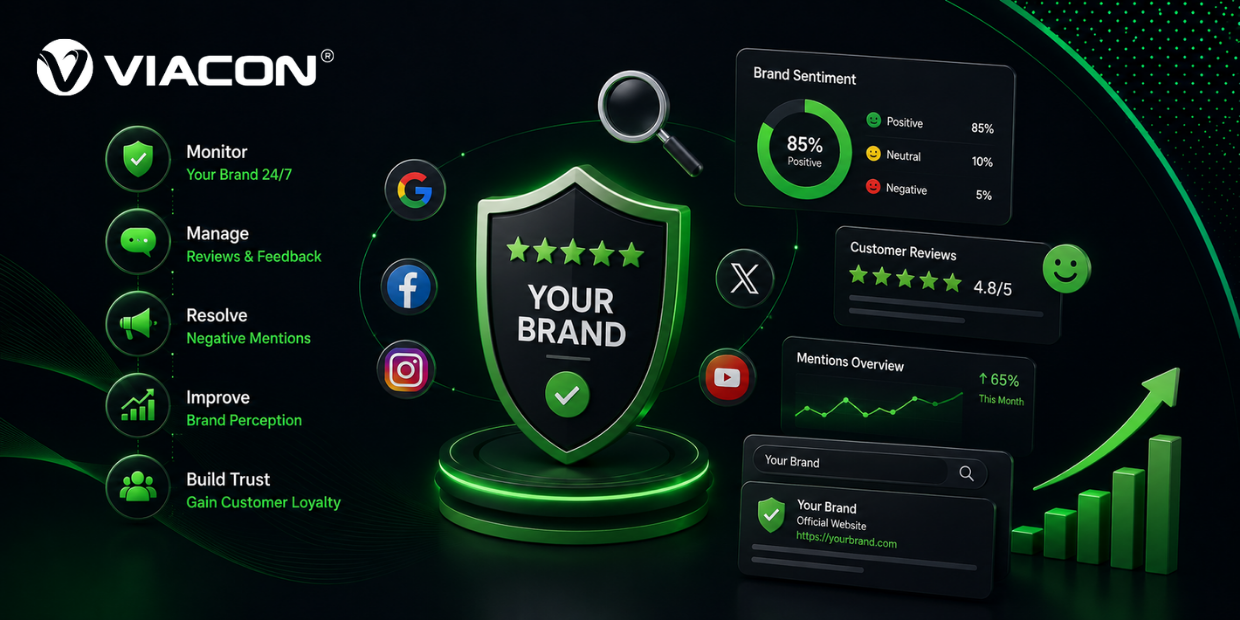
Reputation management services are the human-led strategy layer that sits on top of your online presence. A dedicated team monitors reviews, social mentions, and search results for your brand, then acts on what they find, responding to unhappy customers, promoting the good stuff, fixing SEO issues that surface negative content, and building a communication plan for when things go sideways.
That’s different from reputation management software, which is just the tooling. Software can flag a new review the moment it lands. It can’t decide how to respond to an angry customer without sounding defensive, write a press statement during a crisis, or rebuild trust after a PR mess. That still takes people.
Here’s The Distinction At A Glance:
| Reputation Management Software | Reputation Management Services | |
|---|---|---|
| What it is | A monitoring/alerting tool | A managed strategy run by a team |
| Best for | Businesses with in-house marketing staff who just need alerts | Businesses that want it handled end-to-end |
| Handles crisis response | No, you still write and approve everything | Yes, strategy, messaging, and execution |
| Improves search rankings for your brand name | Rarely | Yes, through SEO and content |
| Typical cost | $59–$300/month per tool | Custom, based on scope |
Most growing businesses land on a mix: a lightweight tool for alerts, backed by a brand reputation management team that actually does something with what the tool finds.
Why Reputation Management Matters More Than Ever In 2026
The stakes here keep climbing, for a few reasons.
Reviews Decide Purchases Before Your Sales Team Ever Gets A Chance: BrightLocal’s consumer review research has found that most people check at least two review sites before choosing a business, and a large share won’t consider one rated below three stars. If your review profile is thin, inconsistent, or dominated by one bad experience, you’re losing customers you never even knew were looking.
Negative Content Compounds: One unresolved complaint on Google rarely stays alone. People share it on Reddit, include it in “worst companies” listicles, and feature it on review aggregator sites. As these pages climb the rankings, they push your website further down the search results.
AI-generated Answers Now Shape First Impressions Too. When someone asks ChatGPT, Gemini, or Google’s AI Overviews about your business, those systems pull from the same reviews, sentiment signals, and web mentions that shape your traditional search rankings. A reputation strategy that only watches Google’s classic results page is already behind. This is why more agencies are pairing reputation work with AI Search Optimization (GEO), so your brand shows up accurately in AI-generated summaries, not just search results.
Recovery Takes Time, So Prevention Is Cheaper Than Repair. It’s much faster to keep a 4.5-star average steady than to rebuild one after it drops to 3.2.
What’s Included In Professional Reputation Management Services?
Not every provider packages things the same way, but a solid reputation management company should offer some version of each of these:
1. Negative Feedback Management: A structured plan for responding to unfair or emotional reviews without escalating them publicly, acknowledging the concern, and then moving the resolution to a private channel.
2. Positive Review Generation: Prompting happy customers, at the right moment, to leave a review through email, SMS, or in-app requests so your rating reflects your actual average customer, not just the loudest one.
3. Survey And Feedback Campaigns. Structured surveys that catch dissatisfaction before it turns into a public review, and give you real data on what to fix.
4. SEO-driven Reputation Repair. Building and optimizing content that outranks old negative articles or thin, outdated listings, so the first page of your branded search actually represents you fairly. This overlaps heavily with core SEO services, keyword research, technical fixes, and content that earns rankings.
5. Social Media Reputation Monitoring: Tracking mentions, tags, and comments across platforms in real time, so a small complaint gets addressed before it turns into a screenshot with 10,000 shares.
6. Crisis Communication Planning. A documented plan defines how your team responds, what they say, and how quickly they act to prevent a bad moment from becoming a bad month.
If You Want To DIY: Popular Reputation Management Software
If you have in-house marketing capacity and just need the monitoring layer, these tools are commonly used for review tracking, sentiment analysis, and reporting:
| Software | Best For | Starting Price |
|---|---|---|
| Birdeye | All-in-one review and messaging management | ~$299/mo |
| Podium | Small businesses wanting two-way texting + reviews | ~$200/mo |
| Yext | Local SEO + listings alongside reviews | ~$199/mo |
| ReviewTrackers | Straightforward review tracking and alerts | ~$59/mo |
| Trustpilot | Review generation and credibility badges | ~$299/mo |
These tools are genuinely useful, but they hand you the data and stop there. Someone still needs to write the response, decide the strategy, and fix the underlying issues. That’s the gap reputation management services are built to fill.
Core Capabilities Every Reputation Management Provider Should Offer
Whether you go with software, a full-service partner, or both, look for these five capabilities:
- Review Monitoring Across Every Platform That Matters, Google, Yelp, Facebook, and industry-specific sites, is pulled into one place instead of five separate logins.
- Sentiment Analysis that sorts feedback into positive, negative, and neutral automatically, so recurring complaints surface instead of getting buried.
- Reporting And Analytics that track review volume, average rating, and response time over time, not just a single snapshot.
- Social Media Integration, so mentions and comments get caught alongside formal reviews. This is where a connected social media marketing strategy pays off, since a lot of reputation damage now starts as a comment thread, not a review.
- Automated alerts so nothing sits unanswered for days while you’re heads-down on something else.
How Much Do Reputation Management Services Cost?
Pricing varies based on how much work your team manages and how involved the service provider is. As a general range:
- Software-only Tools: $59–$300/month per platform.
- Small Business Managed Services: roughly $300–$1,500/month, usually covering review monitoring, response management, and basic reporting.
- Mid-size And Multi-location Businesses: $1,500–$5,000+/month, adding sentiment analysis, content/SEO support, and dedicated account management.
- Enterprise Or Crisis-level Engagements: custom quotes, often project-based, for large-scale reputation repair or active crisis response.
The honest answer is that a fair quote depends on your industry, how many locations you have, and how much repair work (versus maintenance) is needed. If you want a number specific to your situation instead of a generic range, a free audit is the fastest way to get one.
How To Choose The Right Reputation Management Company?
Before you sign anything, run the provider through this checklist:
Do They Explain Pricing Clearly? A vague quote with no breakdown of deliverables is a red flag. You should know exactly what you’re paying for platforms monitored, response time SLAs, and reporting frequency.
Do They Offer A Named Point Of Contact? If every question routes through a general support inbox, expect slow answers during the moments that matter most.
Can They Show Real Examples Of Past Work? Ask for case studies or client results, not just a features list.
Do they check third-party review sites for the provider itself? It’s worth searching for the company’s own reviews on sites like G2, Capterra, or Trustpilot before you commit. If you see a consistent pattern, not one-off complaints, but recurring issues around payment, communication, or unmet promises, treat that as a useful signal, not gossip. It’s exactly the kind of due diligence a good reputation management company should expect you to do.
Do they go beyond “monitor and respond”? The strongest providers connect reputation work to your broader marketing, SEO, content, and social instead of treating it as an isolated task.
Why Choose Viacon for Reputation Management Services?
There’s no shortage of software promising to “manage your reputation.” What’s harder to find is a team that treats it as a business strategy instead of a dashboard to check once a week.
Viacon’s reputation management services combine proactive and reactive work: continuous monitoring and sentiment tracking on one side, and crisis response, communication planning, and SEO-driven content repair on the other. You get both the early-warning system and the people who know what to do when it goes off.
What Makes Viacon Different From Other Agencies
- We Don’t Treat Reputation As A Standalone Service: Most agencies bolt reputation management onto a review tool and call it a day. Viacon connects it to SEO, content marketing, and social media, so a negative search result doesn’t just get “monitored”, it gets outranked.
- Real People, Not Just Automation: Our team has backgrounds in public relations, digital marketing, and crisis communication. The response to an angry customer or a bad news cycle is written by someone who’s handled it before, not a templated reply.
- Customized, Not Templated, Strategy: Every plan starts with your specific challenges and industry, not a one-size-fits-all package.
- A Dedicated Account Manager: So you’re never explaining your situation from scratch to a new person every time you reach out.
- Transparent Reporting: with clear metrics tied to what actually moved rating changes, response times, and search visibility, not vanity numbers.
- 100+ Businesses Already Trust Viacon: with their brand’s online presence, across industries from hospitality to healthcare to SaaS.
If you’re ready to stop reacting to bad reviews and start controlling the narrative, get in touch with Viacon’s team for a strategy session.
Real Results: What Reputation Management Looks Like In Practice
These are illustrative examples of the kind of turnaround a structured reputation strategy typically produces; the patterns show up again and again across industries.
A Neighborhood Café with a shaky 3.8-star average started actively responding to every review, thanking happy customers by name and resolving complaints publicly before taking them offline. Within six months, its rating climbed to 4.6, and foot traffic followed.
A Multi-location Retail Chain used centralized review monitoring to spot that two stores were consistently getting flagged for the same issue: slow checkout lines. The corporation addressed it directly at those locations, and ratings evened out across the whole chain within a quarter.
A Healthcare Provider struggling with a thin, outdated review profile rolled out automated post-visit review requests and a faster response process for negative feedback. Review volume grew significantly, average ratings improved, and new patient inquiries rose alongside it.
Want to see real numbers instead of illustrative ones? Browse Viacon’s case studies for actual client results across SEO, content, and reputation work.
Common Reputation Management Mistakes (And How To Avoid Them)
Ignoring Reviews Until There’s A Crisis: Reputation work isn’t a fire extinguisher; you grab it once smoke appears, it’s routine maintenance. Check in weekly, not just when something goes wrong.
Responding Emotionally To Negative Reviews: A defensive or sarcastic reply almost always makes things worse, and it’s permanent. Acknowledge the concern, move the resolution offline, and stay professional even when the reviewer isn’t.
Only Playing Defense: Managing complaints without actively generating positive reviews means your rating drifts down by default, since happy customers rarely leave reviews unprompted.
Treating It As A One-time Project: A reputation “cleanup” that isn’t followed by ongoing monitoring tends to slide right back to where it started.
Neglecting The Content Side: If the only content about your brand online is reviews, you have no way to influence what shows up alongside them. A steady stream of owned content guides, case studies, and press mentions gives search engines (and AI tools) more positive material to draw from. This is where content marketing services and reputation management genuinely overlap.
Frequently Asked Questions:
Q1.What Are Reputation Management Services?
A: They’re managed programs run by a team, not just software, that monitor your brand across review sites and social media, respond to feedback, and use SEO and content to make sure search results reflect your business fairly.
Q2.How Much Do Reputation Management Services Cost?
A: Most small businesses pay somewhere between $300 and $1,500 per month for managed services, while larger or multi-location businesses often pay $1,500–$5,000+, depending on scope. Crisis-level work is usually quoted separately.
Q3.Can A Reputation Management Company Remove Negative Reviews?
A: Legitimate providers can request removal of reviews that violate a platform’s policies (fake reviews, harassment, spam), but they can’t and won’t remove genuine negative feedback just because it’s unflattering. The realistic goal is responding well and outweighing it with more positive, recent reviews, not erasing it.
Q4.Is Reputation Management The Same As PR?
A: They overlap but aren’t identical. PR focuses on shaping public perception through media and messaging. Reputation management is narrower and more digital reviews, search results, and online sentiment specifically.
Q5.Do I Need Reputation Management If I Don’t Have Many Reviews Yet?
A: Yes, arguably more than a business with an established review base. A thin review profile is easy for one bad experience to dominate, and proactive review generation early on prevents that.
Q6.How Long Before I See Results?
A: Review-response improvements show up within weeks. Brand reputation management typically improves ratings and search visibility within three to six months, depending on how much your team needs to repair.
Q7.Does Reputation Management Affect SEO?
A: Yes. Review signals, brand search volume, and click-through rates all factor into how search engines and increasingly AI answer engines rank and describe your business.
Q8.What’s The Difference Between Reputation Management Software And Reputation Management Services?
A: Software gives you monitoring and alerts. Services add the strategy, writing, and execution on top of someone deciding what to do with what the software finds, and doing it.
Final Thoughts
Your online reputation isn’t something that happens to you; it’s something you can actively shape, one review response and one piece of content at a time. Whether you’re dealing with a handful of unfair reviews or trying to get ahead of your first real PR moment, the right reputation management services turn a reactive scramble into a steady, manageable process.
Viacon combines review management, SEO, content, and AI-driven search visibility into one connected strategy so your brand’s story gets told the way it actually deserves to be told. Get in touch for a free consultation and see what a tailored plan looks like for your business.