Microsoft Advertising published full documentation for its Conversions API (CAPI) on August 18, 2026: event schemas, authentication, error handling, all of it. CAPI has been in beta for a while; this is the first complete technical spec.
What It Does
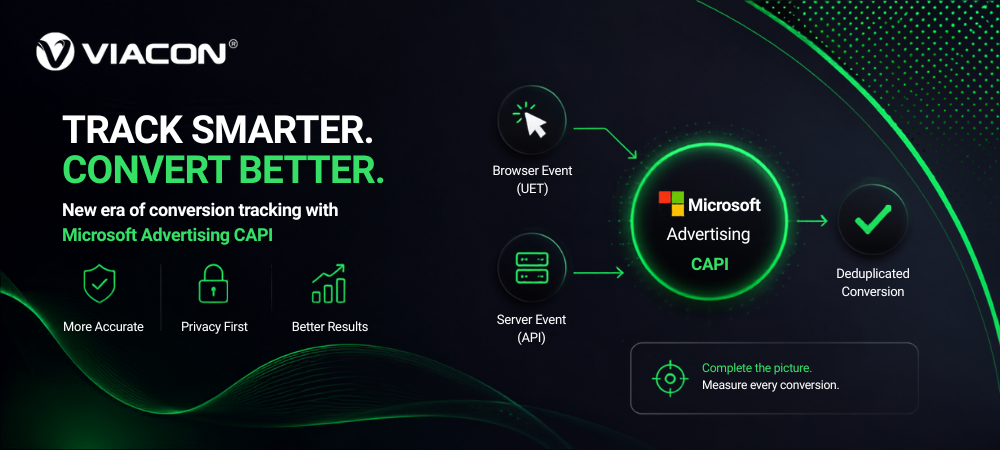
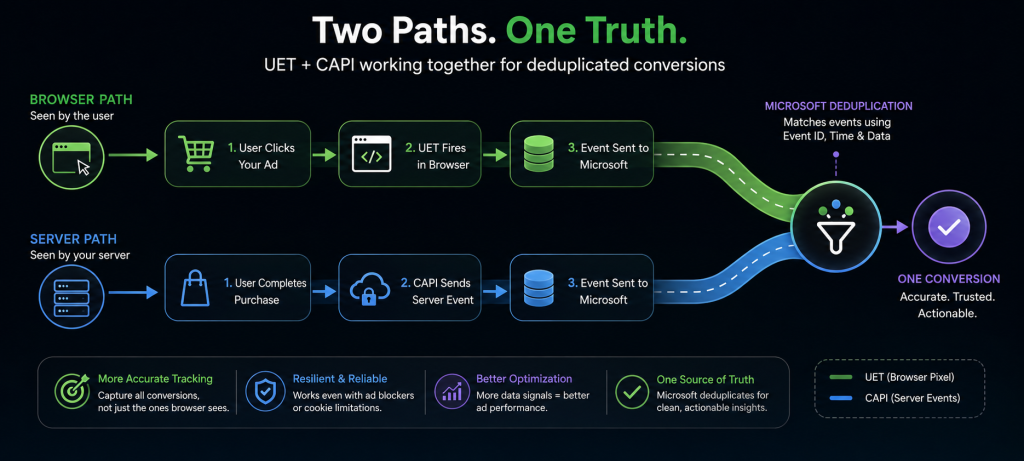
Browser tags like Microsoft’s UET miss conversions blocked by ad blockers, cookie restrictions, and Safari’s tracking prevention. CAPI sends conversion data server-to-server instead, bypassing the browser entirely. It’s built to run alongside UET, not replace it.
| What’s The Difference Between UET And CAPI? UET is the browser tag; CAPI is a server-side connection meant to be paired with it. Use the same eventId on both, or the same conversion gets counted twice. |
Three Ways To Implement It
- Direct API: Full control, needs in-house engineering
- Partner integrations: Tealium, Segment, Stape.io, and others, if you already run a CDP
- Server-side tag manager: Fastest setup for web-focused teams
| Do I Need A Developer? For a direct build, yes. The partner or tag-manager routes lower the technical lift considerably. |
What You Actually Send
Every event needs at least one identifier: msclkid (Microsoft’s click ID) or a hashed email/phone. Raw personal data never goes through email, and phone must be SHA-256 hashed following Microsoft’s exact formatting rules, or the field gets silently dropped.
Planning to use CAPI for remarketing? Add ID Sync, a client-side pixel Microsoft requires to connect visitor IDs to its systems. It has to run in the browser, even though CAPI itself is server-side.
Before You Build
- Confirm CAPI access on your account; it’s still in beta.
- Pick an implementation path.
- Plan hashing and consent handling (
adStorageConsent) upfront. - Event timestamps must fall within 7 days; batches cap at 1,000.
This puts Microsoft roughly in step with Meta’s Conversions API and Google’s Enhanced Conversions: the same server-side logic, applied to a third platform. If most of your real conversions offline sales, CRM-qualified leads happen outside the browser today, this is where the accuracy gain actually shows up.
Want this scoped and built rather than handed to a stretched dev team? Our performance marketing team can help.