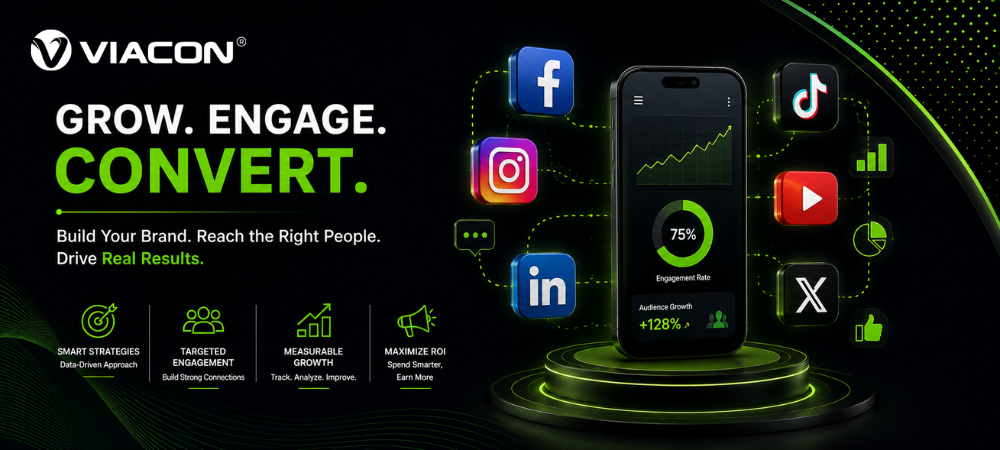
Social media marketing isn’t a trend. It’s the new marketing norm. If you have a business and an active marketing team (in-house or agency), you should also be on social media.
So far so good. But problems start when businesses start seeing their social media as a digital billboard instead of a platform to engage with their direct audience.
What most such brands lack is a definitive guide. It doesn’t always have to be one filled with overwhelming data and performance graphs. But a basic strategy with a categorized target audience, primary platform, and creative action plan takes a business a long way.
That’s what many businesses fail to get right, especially when they’re starting, and we can fix that. In this guide, we will explore the basics of social media marketing to help your business kickstart on social media platforms. Let’s get started.
What Is Social Media Marketing?
Social media marketing is the practice of using platforms like Instagram, LinkedIn, TikTok, and Facebook to build an audience, share content, run paid campaigns, and turn followers into customers. It sits on four legs, and most businesses only ever build one or two of them:
- Organic Content – The posts, Reels, and threads you publish without paying to boost them.
- Paid Advertising – Sponsored placements that put your message in front of people who don’t follow you yet.
- Community Management – The comments, DMs, and reviews you respond to every day.
- Analytics And Listening – The data that tells you what’s actually working.
Skip one of these four, and the other three end up doing more work than they should. A brand that only posts and never checks analytics is flying blind. A brand that only runs ads and ignores community management is paying to attract people it then ignores. The rest of this guide walks through all four, in order, so you can build a strategy that doesn’t have gaps in it.
If you’d rather hand this off to a team that does it daily, that’s the core of what a social media marketing agency actually does: build the strategy, produce the content, run the ads, and report on what moved.
Role Of Social Media Marketing In The Digital Market
There is no contemporary business strategy without social media marketing today.
Social media is a brand’s direct mouthpiece to consumers.
These platforms help businesses reach the right people at the right time with precision and data-driven marketing.
The opportunities on social media are equal for startups, enterprises, and international corporations alike.
Most social media platforms provide data-driven insights, making marketing efforts something businesses can track and measure with ROI.
From visually engaging content on Instagram to professional networking on LinkedIn, efficient social media marketing is critical to success today within the rapidly moving digital playground.
The Real Benefits, Beyond Vanity Metrics
Likes and follower counts look nice on a slide, but they don’t pay bills on their own. Here’s what social media marketing actually does for a business when it’s run properly:
- Brand Awareness – Puts your name in front of people who’ve never heard of you, at a fraction of traditional media cost.
- Lead Generation – Forms, DMs, and comments turn into a pipeline you can actually track.
- Customer Service – A lot of people now message a brand before they email or call it.
- Competitive Intelligence – Watching what competitors post and how audiences react tells you what’s working in your category.
- Direct Sales – Shoppable posts and in-app checkouts on Instagram, TikTok, and Facebook shorten the path from “saw it” to “bought it.”
- Loyalty And Retention – A brand that shows up consistently and responds to people keeps customers longer than one that only shows up at launch time.
For a deeper breakdown of why this matters for growth specifically, see our piece on the importance of social media for business.
Understanding Social Media Platforms
The trend of engaging on social media boomed prominently with Facebook. Now, there’s Instagram, Snapchat, X, and so much more.
The top social media platforms present different opportunities for marketers across industries. And the opportunities look like this:
| Platform | Best Opportunity | Ideal Audience | Main Demographic |
|---|---|---|---|
| Community building & local ads | SMBs, local businesses | 25-54 years | |
| Visual branding & social commerce | D2C, fashion, beauty, travel | 18-34 years | |
| B2B leads & thought leadership | SaaS, B2B, consultants | 25-54 years professionals | |
| TikTok | Viral reach & trend marketing | Consumer brands | 16-34 years |
| Product discovery & purchase inspiration | Lifestyle, décor, fashion | 25-44 years, female-skewed | |
| X (Twitter) | Real-time engagement & support | Media, tech, B2B | 18-49 years |
| WhatsApp Business | Customer support & lead nurturing | Local businesses, e-commerce | 18-44 years |
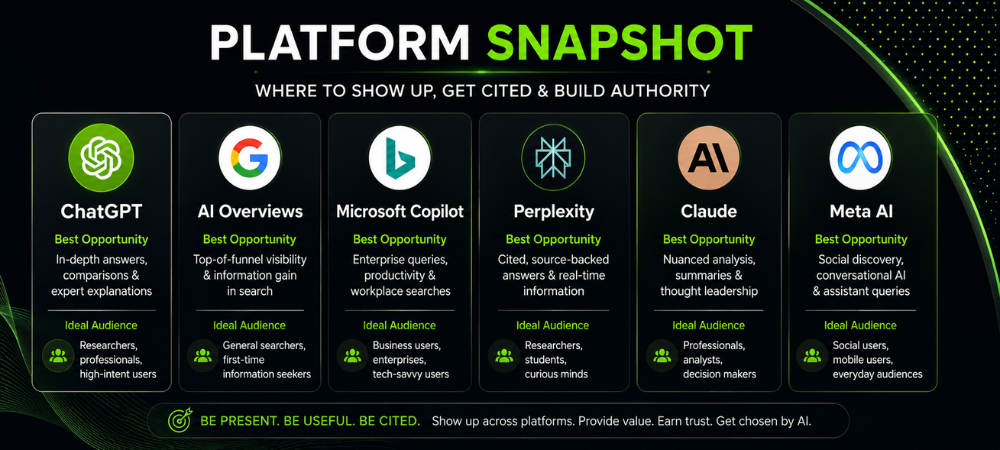
Pick the right social media platform for the right business before you start with any social media marketing strategy. Different platforms have the majority of their audience from different demographics.
The smart move is to identify the platform that nurtures the audience you’re targeting. By focusing on the platforms that align with your goals, you can maximize your impact without spreading your resources too thin.
Platforms Worth Watching
The table above covers the platforms most businesses already know. A couple of others deserve a second look depending on your audience. Threads has settled into a real home for text-first, real-time conversation and now sits alongside X rather than replacing it. If your audience is research-driven or B2B, don’t overlook Quora; it rewards genuinely useful answers over polish, and we’ve written a full guide to Quora marketing if that’s a channel worth testing for you.
| What’s The Best Social Media Marketing Platform? Depends on your audience and business. Instagram and Pinterest work well for visual content. LinkedIn is ideal for professional networking. Facebook and TikTok are mass-audience platforms, which makes them perfect for most businesses. |
| Do I Need To Be On Every Social Media Platform? No, and trying to be on every platform usually backfires. Two or three platforms where your audience actually spends time, done well, will outperform a thin presence spread across six. Use the comparison table above to match your audience to the right one or two before you consider adding a third. |
Building A Social Media Marketing Strategy
Here’s how to build a social media strategy for your business from the ground up:
Defining Your Goals And Objectives
Your social media marketing starts to pay off when you stop treating it like a digital billboard. That starts with defining your goals.
A successful social media strategy begins with clear goals. It could be about increasing brand awareness, driving website traffic, or generating leads. Each objective should follow the SMART framework: specific, measurable, attainable, relevant, and time-bound.
For instance, a goal might be to boost Instagram engagement by 15% over three months. Align these goals with broader business objectives and tailor them to each platform’s strengths.
| How Long Does It Take To See Results From Social Media Marketing? Organic growth usually shows early signals, better engagement rates, and more shares within four to six weeks of posting consistently, but meaningful follower and lead growth typically takes three to six months. Paid social can show results within days, since you’re buying reach directly rather than earning it. Build that timeline into your goals so “it’s not working yet” doesn’t turn into “we quit too early.” |
| Who Is Your Target Audience? Audience is the core element of social media marketing. You could identify your audience according to: Demographic Preferences Online behavior. While doing audience research, ask, “What are your customers’ pain points, and how can your product or service relieve them?” |
Use tools like Google Analytics, social media insights, and customer surveys to understand your audience. A proper segmentation based on their needs and your offering helps personalise your content even more. Plus, segmentation also tells you which platform to target for your social media strategy.
Once you’ve got the raw data, turn it into two or three buyer persona short profiles that capture a segment’s role, pain points, and where they actually spend time online. It sounds like busywork, but it keeps a whole team pointed at the same audience instead of everyone guessing separately.
Pair that with social listening tracking what people say about your brand, your competitors, and your category even when they’re not tagging you, and you’ll catch shifts in what your audience cares about before they show up in your engagement numbers.
Crafting Your Brand Voice And Message
If you already don’t have a brand book, this is the time to think about one (before getting any piece of content out). Your brand strategy includes the brand voice your content will carry and the image (of a personality) your audience will remember.
What do you think of when someone says “Nike,” “Coca-Cola,” or “Netflix,” recently? Did any of these brand names make you associate with a certain universal feeling? If yes, you’ve grasped their brand voice.
That’s what your business needs to do for your target audience. Based on their demographic and your business, it could be authoritative, playful, empathetic, or inspirational. But first, you need to identify what your brand voice is.
Choosing Your Content Pillars
Once your voice is set, decide what you’ll actually talk about. Content pillars are the three to five recurring themes your posts fall under think education, behind-the-scenes, product, customer stories, and industry commentary. They stop you from staring at a blank calendar every week, and they make sure your feed doesn’t turn into one long advertisement.
A simple ratio to start with: 80% of your content should inform, entertain, or help your audience, and 20% should directly promote what you sell. Brands that flip that ratio tend to lose followers faster than they gain them, which ties back to the over-promotion mistake covered later in this guide.
Who’s Doing The Work? Roles And Workflow
Strategy on paper is one thing; someone still has to write the captions, design the graphics, schedule the posts, and answer the comments. For a solo founder, that might mean blocking two hours a week and batching everything at once. For a small team, it usually means splitting content creation, community management, and paid ads across two or three people, even part-time. Whatever the setup, write down who posts, who approves, and who replies to DMs on weekends because “everyone” usually means no one.
| Can Small Businesses Do Social Media Marketing Without An Agency? Yes, particularly in the early stages, a founder or one team member with a clear content pillar list and a scheduling tool can run this in a few hours a week. The tipping point usually comes when paid ads, analytics, and content production all need attention at once, and nobody has bandwidth left for the actual business. Our post on why small businesses need social media management walks through how to tell when that point has arrived. |
| How Often Should I Post On Social Media? The frequency depends on the platform. For instance, posting 1-2 times daily is effective on Instagram, but Twitter thrives on multiple updates per day. Set a schedule you can maintain since consistency is key. |
As a rough starting cheat sheet, here’s how often most brands post on each platform before adjusting based on their own results:
| Platform | Recommended Frequency | Best Content Type |
|---|---|---|
| 3–5 posts/week | Community updates, links, events | |
| 1–2 feed posts/day, plus daily Stories | Reels, carousels, Stories | |
| 2–4 posts/week | Thought leadership, case studies | |
| TikTok | 3–5 posts/week | Short-form video, trends |
| 3–10 pins/day, batched and scheduled | Idea pins, product pins | |
| X (Twitter) | 3–5 posts/day | Real-time updates, replies, threads |
| WhatsApp Business | As needed, customer-triggered | Order updates, support replies |
Treat these as a starting point, not a rule. A brand that can only manage two solid Instagram posts a week will get further than one posting five rushed ones.
Content Creation For Social Media
Now that the basic part of the strategy is out of the way, get down to creating content. Here’s how to proceed:
Types Of Social Media Content
Social media content is highly visual-dependent, unless you’re writing long LinkedIn posts. But most social platforms allow a variety of formats with written, video, and still photographs.
If you’re doing Instagram, use stories and reels for short content. Craft impactful messages, carousels for telling a story or explaining complex ideas, and live videos to create real-time engagement opportunities.
Don’t stay fixated on a format. It’s best to try out different variations of formats and content types.
Repurposing Content Without Repeating Yourself
You don’t need a new idea for every platform. One good idea, told differently, goes a long way. A single customer case study can become a LinkedIn write-up, a three-slide Instagram carousel, a 30-second TikTok, and a pull-quote graphic for X same core story, different format for each audience’s habits. This is usually the fastest way to fill a content calendar without burning out a small team, and it keeps your message consistent across every platform you’re on.
USP Of High-Performing Content
What makes content actually work? It comes down to relevance, creativity, and quality working together. Your posts need to speak to what your audience actually cares about- their interests, their pain points.
And don’t forget the CTA; without it, you’re just talking into the void. Visuals help too, when they fit naturally. Oh, and keep an eye on trends that make sense for your business; not every trend is worth chasing.
Hashtag Strategy That Still Earns Reach
Hashtags don’t carry the weight they used to, but they’re not dead either; they still help platforms categorize content and help niche audiences find you through search. Mix a couple of broad, high-traffic tags with a few specific ones tied to your industry or location, and skip the temptation to cram in twenty. On Instagram and TikTok, three to eight relevant tags usually outperform a wall of them. On LinkedIn and X, one or two is plenty. Build a small rotating list per platform instead of typing new ones from scratch every time.
Creating A Content Calendar
Think of a content calendar as your social strategy, laid out in a way you can actually act on. It’s also what keeps engagement steady instead of spiky. Plan around key dates, campaigns, and whatever’s trending in your industry, and don’t skip the details, captions, hashtags, visuals- all of it.
Tools like Hootsuite or Buffer can automate the posting part, which honestly saves a ton of time. A good calendar keeps your content varied too. You’re not just promoting nonstop; you’re mixing in things that educate or entertain along the way.
If content planning feels like the bottleneck more than posting itself, that’s usually a sign the content strategy needs work before the calendar does. Our content marketing services page covers how we help teams fix that upstream.
Leveraging Social Media Advertising
Paid ads deserve a spot in your strategy too. Here’s how to make the most of them.
Overview Of Social Media Ads
Organic social media is a long game; you show up consistently, build a voice, and earn real traction over time. Paid advertising is different. It’s more of a sprint, something you lean on for specific seasons or pushes.
Facebook and Instagram give you plenty of formats to play with: images, video, carousels, so there’s room to present your message however fits best. Get it right, and the ROI can be excellent. If ad performance is where your team feels least confident, that’s precisely the gap our performance marketing services are built to close.
| What’s The Difference Between Organic And Paid Social Media Marketing? Organic is the content you post for free; it builds trust and voice over time but reaches mostly people who already follow you. Paid puts your content in front of people who don’t follow you yet, in exchange for ad spend, and it works faster but stops the moment you stop paying. Most effective strategies use both, with paid amplifying content that’s already proven itself organically. |
Setting Up Campaigns And Budgeting
Begin with clear advertisement gaols and budget. Marketers usually aim for common social media goals like lead generation, branding, or sales. Once that’s sorted, use Facebook Ads Manager to define exactly who you’re trying to reach and what you’re trying to achieve.
From there, build a budget that balances reach with actual returns. It’s ideal to run a trial and A/B test your ads to see if it’s benefiting the business at a smaller scale. Then it’s about tweaking and scaling it up as you go.
Optimizing Ad Performance
Keep watching your campaigns and tweaking as you go. A/B testing is your friend here; try different visuals, headlines, targeting, and see what sticks. And refresh your ads regularly; nobody wants to see the same ad for the tenth time. Don’t forget to retarget the people who almost converted but didn’t quite get there.
Pay close attention to your analytics too, and shift your approach based on what’s actually landing with your audience. Staying on top of optimization is what keeps your campaigns delivering real results.
| What Should I Budget For A Social Media Ad Campaign? Honestly, it depends; your budget should match your goals and platform. A good starting point is somewhere between $500 and $1,000 a month, then adjust from there based on how things perform. Focus on ROI by narrowing in on the right audiences and running A/B tests along the way. |
Influencer And Creator Partnerships
Paid ads aren’t the only way to buy reach. Working with influencers and creators has become its own line item in most social media budgets, and it fills a gap ads and organic posts can’t: borrowed trust. An audience that already trusts a creator extends some of that trust to whatever the creator recommends.
You don’t need a celebrity for this to work. Micro-influencers, usually with somewhere between 10,000 and 100,000 followers, tend to have tighter, more engaged communities and cost far less than macro or celebrity names. For most small and mid-sized businesses, a handful of micro-influencer partnerships will outperform one expensive macro deal.
A Few Things Matter More Than Follower Count When You’re Vetting A Partner:
- Engagement Quality – Read the actual comments, not just the count. Genuine replies beat generic emoji spam.
- Audience Overlap – Check whether their followers actually match your target customer, not just your industry.
- Content Style Fit – A creator whose tone clashes with your brand voice will make the partnership feel forced.
Two things to get right before you launch anything: disclosure and usage rights. Sponsored content needs a clear disclosure #ad or “paid partnership” every time; this isn’t optional, it’s a legal requirement in most markets, not a suggestion. And agree in writing on whether you can reuse the creator’s content in your own ads or feed later, because that’s a separate right from the original post going live. For more ideas on turning this kind of reach into actual revenue, our post on ways to use social media marketing to increase revenue is a good next read.
User-generated content (UGC) works on the same trust principle without the negotiation. Encourage customers to tag you, then ask permission to repost the best of it. It costs nothing but a DM, and it reads as more credible than brand-produced content because it is.
How To Build And Nurture An Online Community?
Practical Ways To Build Real Community
Community doesn’t happen because you posted consistently for a month. It happens because people feel like replying gets them something back. A few things that actually move the needle:
- Reply Like A Person, Not A Brand Account: Skip the copy-paste “Thanks for reaching out!” and answer the actual question.
- Give People A Reason To Talk To Each Other, Not Just To You: Polls, questions, and “tag someone who…” prompts do this cheaply.
- Host Something Live Occasionally – An AMA, a Q&A, a behind-the-scenes stream. Live formats get disproportionate engagement because they feel unscripted.
- Spotlight Your Community: Reposting a customer’s photo or shouting out a helpful comment tells everyone watching that participation gets noticed.
- Show Up In Your Own Comments Within Hours, Not Days: The algorithm rewards early engagement, and so do people.
Handling Negative Comments And Criticism
Every brand gets a bad comment eventually, and how you handle the first one sets the tone for all the ones after it. Don’t delete a critical comment just because it stings; that usually escalates things and looks worse in screenshots than the original comment did. Acknowledge the issue publicly in a short, calm reply, then move the detailed conversation to DM or email where you can actually resolve it.
Treat recurring complaints as free product feedback rather than noise to manage. If five people mention the same shipping delay in a week, that’s data your operations team needs, not just a social media problem. And know where your line is: genuine harassment, spam, or abusive language can be removed or blocked without it being “silencing criticism.” For a fuller playbook on this, see our guide on improving your brand’s reputation management online.
Community efforts and hard numbers aren’t opposites; they work together, and they get measured together too.
Real interactions are what keep your social media efforts alive. Here’s how to build a community that actually sticks around. Social platforms let you track all kinds of metrics: clicks, views, shares, cost per action- you name it.
And ROI? That’s simply how you measure the return on what you’re putting in, so you know whether your campaigns are actually worth it. These numbers are what keep your strategy honest and on track.
Tools For Social Media Analytics
Analytics tools make tracking performance so much easier.
Facebook Insights, Instagram Analytics, and LinkedIn Analytics all come with built-in metrics that help you understand how your audience behaves.
Third-party options like Hootsuite, Sprout Social, and Google Analytics give you a broader, cross-platform view.
These tools show you engagement, demographics, and campaign ROI, all things that help sharpen your approach.
Use them. Seriously, they’re what turn guesswork into informed decisions that actually move your strategy forward.
Building Out Your Toolkit
Most teams end up with a small stack rather than one do-it-all tool, split roughly into four categories:
- Scheduling – Hootsuite, Buffer, or Later for planning and publishing across platforms.
- Design – Canva or Adobe Express for turning a content calendar into actual graphics, fast.
- Listening – Brand24 or Sprout Social’s listening tools for tracking mentions you weren’t tagged in.
- Reporting – Native platform analytics plus Google Analytics for anything that involves a click to your website.
You don’t need all four on day one. Start with scheduling and native analytics, and add listening once you have enough volume that manually searching your brand name stops being realistic. If you want a clearer picture of where your current setup has blind spots, a free digital audit will flag it.
Adapting Strategies Based On Insights
Social media algorithms are always evolving, and so is user behaviour. That’s why no social media strategy works for three months straight. That’s a gap that needs closing, and analytics help here. Learn from your data to identify what to change and where does your strategy needs a tweak. Most of the time, better targeting and fresh creative do the trick. But sometimes, an expert’s point of view helps you understand the best course of action.
Social Media Trends And Future Outlook
Social media never sits still, and every business needs a game plan for keeping up.
(i) Emerging Trends In Social Media Marketing
Social media breathes on engagement, and thrives on trends. One day, a cute cat’s video might set off a viral creator trend; the other day, the same creators would hop on the hook steps of a catchy song.
Short-form video content works the most on TikTok, Instagram, and now YouTube. But interactive content like polls, quizzes, and AR experiences tends to boost engagement. Marketers must find out what works best and when.
One shift worth planning for: people are increasingly using TikTok, Instagram, and even Pinterest the way they’d use a search engine, typing “best coffee shop near me” or “how to fix a leaky faucet” straight into the app instead of Google. That means your captions and video content need to answer real questions, not just look good, because they’re competing for search intent now, not just scroll-time. We track this shift in more depth in our social media trends roundup, updated as platforms change.
(ii) The Role Of AI And Automation In Social Media
Social media marketing is changing thanks to AI automation and AI agents entering different platforms. AI-generated comments or texts are changing the social media experience. Plus, creators also have the advantage of crunching huge amounts of data to find creative insights and patterns.
As AI keeps improving, expect smarter, more efficient campaigns that connect with audiences on a deeper level.
In practice, that shows up in a few concrete places already: AI-assisted caption and hashtag suggestions inside scheduling tools, chatbots handling first-response DMs before a human takes over, and predictive analytics flagging which draft post is likely to perform before it’s published. None of these replaces a strategy; they just remove the repetitive parts of running one.
(iii) Data Privacy And The Shift To First-Party Relationships
Tracking is getting harder across every platform, not just one. Cookie restrictions and in-app privacy prompts mean brands can no longer rely purely on third-party ad targeting the way they could a few years back. The practical response is building first-party relationships directly through email lists, SMS opt-ins, loyalty programs that don’t depend on any single platform’s algorithm or ad policy. Social media still drives awareness; owned channels are increasingly where the relationship actually lives.
Common Mistakes To Avoid
Even with a solid strategy and a great team, plenty of businesses still miss the mark. Here are the mistakes that trip people up most:
(i) Over-promotion And Lack Of Engagement
Constantly pushing your product without building any real connection? That’s a fast way to lose your audience. Social media is a conversation, not a sales pitch.
Balance your promotions with genuinely useful posts. Include tips, tutorials, and entertaining content. And actually engage back through comments, polls, and Q&As; that’s how trust gets built.
(ii) Ignoring Analytics And Audience Insights
One of the biggest mistakes in managing social media is to skip analytics. Turning a blind eye to data means losing out on opportunities and wasting effort elsewhere. Also, the truth? You can’t optimize what you don’t measure.
So keep an eye on engagement rates, click-throughs, and conversions regularly. Use what you learn about your audience to shape content and campaigns that actually resonate.
| How Do I Measure ROI On Social Media Marketing? Social media marketing becomes a lot easier than traditional marketing thanks to the list of metrics marketers can track. Use social media marketing tools and analytics tools to measure impressions, reach, clicks, likes, and comments. Check for conversions, click-through rates, and revenue tied to your campaigns to measure ROI. |
(iii) Inconsistent Branding Across Platforms
Good brands build a social media presence. Best brands take it one step ahead: stay consistent across platforms with their tone, visuals, and messaging. But if that’s not followed, it confuses people or dilutes the brand. It’s important to keep a brand’s voice, colours, and logo consistent across platforms and ensure that the brand shows up everywhere.
That consistency builds trust and makes your business instantly recognizable, which is a real edge in a crowded space.
(iv) Buying Followers Or Engagement
It’s tempting when a competitor’s numbers look bigger than yours, but purchased followers and engagement pods don’t buy customers; they buy a follower count that doesn’t convert and tanks your real engagement rate, since platforms measure engagement as a percentage of your audience. Most platforms actively detect and penalize this too, which can quietly hurt how often your genuine posts get shown. Slower, real growth beats a number that doesn’t do anything for you.
(v) Skipping Disclosure And Compliance Checks
This trips up more brands than it should. Sponsored posts need clear disclosure. Contests and giveaways need official rules and a stated end date. Claims about your product, especially in health, finance, or beauty, need to be things you can actually back up. None of this is complicated, but it’s the kind of thing that gets skipped when a post goes out fast, and it’s a lot cheaper to check before publishing than to fix after a platform or regulator flags it.
For Effective Social Media Strategy
Making an effective social media strategy is fifty per cent about knowing your audience and your offerings. The rest of the fifty percent depends on the platform’s algorithm and who your competitors are.
The best marketers simply don’t treat their social media marketing as a checklist. They value content that resonates with the audience and use analytics to draw insights for more refined decisions. So, the right move for an effective social media marketing strategy simply isn’t in showing up. It demands a combination of intent, interaction, and consistency. Still wondering how to improve your efforts? Contact Viacon to get a free social media audit for your brand today.
Before You Go, Here’s The Short Version:
- Define one or two SMART goals before you post anything.
- Pick two or three platforms where your actual audience spends time, not every platform.
- Build three to five content pillars and hold roughly an 80/20 split between value and promotion.
- Keep a content calendar, even a simple one, and repurpose ideas across formats.
- Put real budget behind a test-and-scale ad process rather than one-off boosted posts.
- Respond to comments and DMs like a person, and have a plan for the bad ones too.
- Check your analytics on a schedule, not just when something feels off.
| How Much Does Professional Social Media Management Cost? It varies widely by scope: organic-only management for a small business typically starts in the low four figures per month, while a full-service package with content production and paid ad management runs higher depending on ad spend and platform count. The honest answer depends on your goals and current baseline, which is exactly what a free digital audit is designed to clarify before you commit to a number. |