Most businesses don’t have an SEO problem. They have a sequencing problem. Someone rewrites title tags, someone else publishes blog posts, an agency sends a monthly link report, and nobody can say which of it brings in customers.
A clear SEO strategy fixes that. It decides which searches you want to win, which pages should win them, and how you will know the effort paid off.
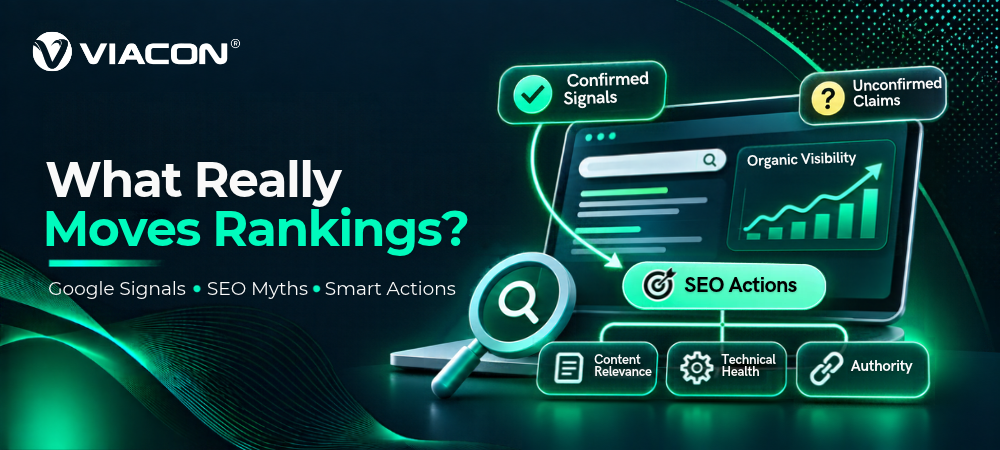
This guide shows you how to create an SEO strategy for 2027 from scratch. You will audit your site, research keywords, rank tasks by impact, measure business results instead of rankings alone, and adjust for Google’s AI Overviews and AI Mode. A 90-day roadmap near the end gives you something to start this month.
What Is An SEO Strategy?
An SEO strategy is a documented plan for earning organic search visibility that supports a specific business goal. It links what your customers search for, the pages you build to answer those searches, and the leads or sales those pages should produce.
It differs from individual SEO activities in scope. Rewriting a title tag, fixing a redirect or publishing a blog post is a tactic. The strategy decides which tactics deserve your time, in what order, and how you will judge them. Without that layer, teams drift toward whatever is easiest instead of whatever pays.
Three Terms Often Get Mixed Up:
- Strategy: Which searches to win, and why.
- Plan: The schedule, owners and deadlines.
- Tactics: The individual actions.
A strategy also supports long-term growth because search results keep moving. Competitors publish, Google updates its systems, and your own products change. A page that earns visits today needs accurate information and a working technical setup to keep earning them, so the strategy treats SEO as a cycle of work rather than a project with an end date.
It is also not a checklist of ranking factors. Google’s rankings come from many systems working together, which our guide to SEO ranking factors explains in detail. This article covers the business plan that sits around them.
What Is The First Step In Creating An SEO Strategy?
The first step is to define the business outcome you want from organic search, such as demo requests, online orders or booked appointments, and to record your current baseline for traffic, leads and conversions. Every later choice about keywords, content and technical fixes gets judged against that outcome. Without a baseline, you cannot show progress.
Why Is An SEO Strategy Important For Businesses?
An SEO strategy for businesses matters because people use search to research problems and compare options before they contact anyone. A plan decides whether the right pages are there when they do. The main gains:
- Organic Search Visibility: Your pages can appear in standard results and as supporting links inside Google’s AI features.
- Qualified Traffic: Targeting by intent brings visitors who are already looking for what you sell.
- Relevant leads: Pages built for commercial queries, such as “payroll software for restaurants”, produce inquiries instead of casual reads.
- Brand Credibility: Showing up with accurate answers to buyers’ questions builds familiarity before the first sales call.
- Customer Acquisition: You still pay for the work, but not per click, which can lower acquisition costs over time.
- Long-term Organic Growth: Pages, topical coverage and earned links accumulate, so each quarter builds on the last.
Key Components Of A Successful SEO Strategy
Eight parts make up a working strategy. Each solves a different problem.
| Component | What it covers | Example task |
|---|---|---|
| Technical SEO | Crawlability, indexability, mobile usability, Core Web Vitals, site structure | Remove a stray noindex tag from service pages |
| On-page SEO | Titles, headings, copy, internal links, images | Rewrite a title that doesn’t match the search intent |
| Off-page SEO | Links and mentions from other credible sites | Publish original data that other sites cite |
| Content strategy | Which topics, formats and pages you create, and who owns them | Build a cluster of pages around one core service |
| Keyword research | The language and intent behind customer searches | Group 200 queries into 25 page topics |
| Local SEO | Business Profile, location pages, reviews, consistent business details | Correct categories and hours in the Business Profile |
| Conversion rate optimization | Turning organic visits into leads or sales | Shorten a demo request form |
| SEO performance measurement | Search Console, analytics and CRM reporting | Report organic leads monthly, not just rankings |
These parts depend on each other. Technical SEO comes first because it decides whether Google can reach a page at all. If you’re unsure how crawling differs from indexing, our explainer on Google crawl vs Google index covers it. Keyword research and content strategy then decide what the page says, on-page SEO shapes how it says it, and off-page work gives other sites a reason to vouch for it. Conversion work and measurement close the loop by showing whether any of it produced business.
A Simple SEO Strategy Framework
If eight components feel like a lot, group them into four layers. This SEO strategy framework also gives you a diagnostic order:
- Access: Can Google crawl, index and display your pages, including on mobile?
- Relevance: Do your pages match what searchers want?
- Authority: Do credible sites, reviews and mentions back you up?
- Return: Do visits turn into leads, and can you prove it?
When results disappoint, work from layer one upward. A page that isn’t indexed has an access problem, and no amount of rewriting will fix it.
How To Build An SEO Strategy Step by Step
This is the process for how to create an SEO strategy, and it doubles as your SEO planning and SEO implementation checklist. Steps one to four gather evidence, steps five to eight shape the work, and steps nine to twelve carry it out and check it.
1. Conduct A Complete Website SEO Audit
Crawl your site, then compare the crawl with Google Search Console’s indexing reports. Check status codes, canonical tags, titles, headings, internal links, mobile rendering and Core Web Vitals. Build a content inventory too: one row per URL with traffic, conversions and last meaningful update. For example, you may find that three service pages carry a noindex tag left over from a redesign. That finding outranks any content idea.
2. Analyze Competitors And Identify Content Gaps
Your search competitors are whoever ranks for your target queries, which may not be the companies you compete with in sales. Read the top five results for your ten most important queries. Note the format, depth and angle of each. If every result is a generic listicle and none shows real pricing ranges or a worked example, you have found a gap.
3. Perform Keyword Research
Start with customer language: sales call notes, support tickets, Search Console queries, autocomplete and forum threads. Group queries by topic, then record the intent, business value and difficulty of each group. Volume alone misleads. A query with a few hundred monthly searches from buyers can be worth more than one with thousands from students. You also don’t need a separate page for every phrasing. Google’s guidance on generative AI search says its systems understand synonyms and general meaning, and that producing pages for every query variation can run into its scaled content abuse policy.
4. Understand Search Intent
Search the query yourself and look at what ranks. Guides signal informational intent. Category or service pages signal commercial or transactional intent. A map pack signals local intent. If the top ten results are all product category pages, a blog post will struggle, however well written. Also note the follow-up questions people ask, because AI Mode and AI Overviews often handle longer, multi-part queries.
5. Map Keywords To Relevant Website Pages
Give every URL one primary topic and intent. A simple spreadsheet works: URL, primary keyword, intent, secondary terms and an action (create, update, merge or leave alone). Mapping also prevents cannibalization. If two pages answer the same question, combine them or give each a distinct job before either one underperforms.
6. Develop A Content Strategy
Decide which pages are pillars, which support them, and who writes each. Google’s guidance favors non-commodity content, meaning pages that add first-hand experience or a viewpoint a reader can’t get from ten similar articles. Add your own data, screenshots of your process, real pricing logic or lessons from failed projects. Let the question set the length. Google states there is no ideal page length.
7. Optimize Existing Website Content
Updating is often faster than publishing. Check each priority page for accuracy, outdated references, missing subtopics and a weak opening that fails to answer the query. Start with pages ranking in positions 5 to 20, because modest improvements there can move clicks. Change the visible modified date only when the content changes in a way readers would notice.
8. Improve on-page SEO
Write a title that describes the page and matches the intent. Use one H1 and descriptive subheadings, short URLs and meaningful image alt text. Write meta descriptions for people deciding whether to click, knowing Google may show a different snippet. Add structured data only where it matches the visible content, and don’t expect it to guarantee a rich result or a higher click-through rate.
9. Resolve Technical SEO Issues
Work in this order: anything blocking indexing (robots.txt rules, noindex tags, wrong canonicals), then broken pages and redirect chains on URLs that earn links, then mobile usability, then Core Web Vitals and JavaScript rendering. Many fixes need developer time, so agree on a schedule early.
10. Develop A Relevant Link-building Strategy
Aim for links from sites your customers and peers actually read. Original data, free tools, expert commentary and partnerships give people a reason to link. Paid links and link exchanges break Google’s spam policies. For specific tactics, read our link building strategy guide.
11. Improve Website User Experience And Conversions
Match the call to action to the intent. A visitor reading a how-to guide isn’t ready for “Book a demo” in the first paragraph, but a service page without a visible contact path wastes its traffic. Check forms on mobile, put proof such as case results near the call to action, and track form submissions and calls as conversion events.
12. Track Performance And Continuously Optimize
Review Search Console, analytics and CRM data monthly, and reassess priorities each quarter. Keep a change log of what you edited and when, so you can connect a movement in results to a specific action.
How To Prioritize SEO Activities
You cannot do every task at once. Judge each one on three things:
- Impact: How much it could move leads.
- Effort: Time, cost and developer help.
- Business Value: How close the page or topic sits to revenue.
The SEO Prioritization Matrix
This SEO prioritization matrix lists the usual candidates:
| Priority area | How to find it | Typical action | Impact | Effort |
|---|---|---|---|---|
| Critical technical issues | Search Console indexing report, site crawl | Remove noindex tags, fix blocked pages and wrong canonicals | Very high | Low to medium |
| Pages ranking in positions 5–20 | Search Console Performance report, filtered by position | Improve depth, title and internal links | High | Low to medium |
| High-impression, low-CTR pages | Performance report, sorted by impressions | Rewrite title and description to match intent | Medium to high | Low |
| Pages with declining organic traffic | Compare periods in Search Console and analytics | Diagnose first: lost indexing, outdated content or new competitors | Medium to high | Medium |
| Missing internal links | Crawl data, orphaned or thinly linked key pages | Add contextual links with descriptive anchor text | Medium | Low |
| Content gaps | Competitor review, query data | Create or expand pages | Medium to high | High |
| Relevant backlink opportunities | Competitor link gaps, digital PR ideas | Outreach built on an original asset | Medium | High |
The impact and effort ratings are working judgments, not measured results. Test them against your own data.
How To Score And Sequence Tasks
To turn the table into a ranked list, score each task from 1 to 5 for impact, business value and effort, then calculate (impact × business value) ÷ effort. A noindex tag on a service page scores (5 × 5) ÷ 1 = 25. Rewriting titles on ten pages at positions 6 to 12 scores (3 × 4) ÷ 2 = 6. A new interactive tool scores (3 × 3) ÷ 5 = 1.8. The order is obvious once you do the math.
Watch for dependencies. A high-scoring task that waits on a developer goes on the calendar, and low-effort wins fill the gap. If traffic fell across many pages at once, treat it as a diagnosis job before an optimization job. Our guide to website traffic recovery shows how to separate the causes.
How Much Should A Business Invest In SEO?
No standard figure fits every business. Work backward instead: estimate what a new customer from organic search is worth, decide how many such customers would justify the spend, then price the work needed to reach that number. Scope matters too (technical fixes, content volume, link earning, in-house time versus agency fees). A low-cost audit is a sensible first spend because it shows where money will matter most. Be careful with anyone who promises rankings, since Google says no one can guarantee a top position.
How To Measure SEO Strategy Performance
Two kinds of numbers matter, and they answer different questions. Visibility metrics show whether searchers see your pages. Business metrics show whether that visibility paid off. A page can double its impressions while leads stay flat, which usually means it appears for queries that don’t match buying intent. Report both, side by side.
The 11 SEO KPIs To Track
| KPI | Where to find it | What it tells you | Watch out for |
|---|---|---|---|
| Google Search Console clicks | Search Console Performance report | Visits from Google results, including AI features, which Google counts in the Web search type | Clicks say nothing about visitor quality |
| Search impressions | Search Console | How often your pages appeared | Can rise from irrelevant queries |
| Average position | Search Console | A rough ranking trend | Averages hide big swings; check by page and query |
| Organic traffic | Analytics | All sessions from organic search, including other engines | Won’t match Search Console clicks exactly |
| Organic engaged sessions | Google Analytics 4 | Sessions lasting over 10 seconds, with a key event, or with two or more page views | An analytics measure, not a Google ranking signal |
| Keyword visibility | Rank tracker | How many target queries you appear for, and where | Estimates vary by location and device |
| Organic leads | Forms, call tracking, CRM | Inquiries that came from organic search | Count qualified leads, not every form fill |
| Conversion rate | Analytics, CRM | Share of organic visits that become leads or sales | Segment by landing page |
| Organic-attributed revenue | CRM plus analytics | Revenue traced to organic touchpoints | Attribution models disagree; pick one and keep it |
| Relevant referring domains | Link analysis tool | How many distinct sites link to you | Relevance beats raw count |
| Core Web Vitals | Search Console, PageSpeed Insights | Loading, responsiveness and layout stability | Field data matters more than a single lab test |
Core Web Vitals And Combining Your Data
For Core Web Vitals, Google’s thresholds for a “good” experience are Largest Contentful Paint within 2.5 seconds, Interaction to Next Paint under 200 milliseconds and Cumulative Layout Shift under 0.1, measured at the 75th percentile of visits. Treat them as part of page experience, not a shortcut to rankings.
Google also explains how to combine Search Console and Google Analytics data. Do it. Search Console shows what happens before the click, and analytics shows what happens after.
What Are The Most Important SEO KPIs?
The most important KPIs are the business ones: organic leads, conversion rate and organic-attributed revenue. Clicks, impressions, average position and Core Web Vitals explain why those numbers move. Pick four to six metrics for your monthly report, and always include at least one that ties to money.
How AI Search Is Changing SEO Strategy In 2027
Google’s AI Overviews and AI Mode now sit alongside the classic results, and people also ask chatbots for recommendations. Your SEO strategy for 2027 has to account for both, though the basics change less than the headlines suggest.
Google says a page must be indexed and eligible to appear with a snippet to show up as a supporting link in its AI features. It also says there are no extra requirements or special optimizations, and that optimizing for these features is simply SEO (Google’s AI features guide). Generative Engine Optimization (GEO) remains a useful label for work aimed at other platforms, such as ChatGPT or Perplexity, but advice there is industry observation, not confirmed guidance. No tactic guarantees a citation or a ranking.
Three Habits Hold Up Either Way:
- Publish Original, Expert-led Content: First-hand data, named experts, and a documented process give readers and AI features something other pages lack.
- Fix Access First: Crawl, indexing and snippet problems rule a page out before content quality matters.
- Measure What AI Sends: Use Search Console’s Generative AI performance report, AI referral sessions in analytics and a monthly check of brand mentions. Read the results as directional, since AI answers vary by person and day.
For the detailed picture, see our breakdown of SEO trends 2027.
How Is AI Changing SEO In 2027?
AI features add answer-style results with supporting links, and searches are getting longer and more conversational. Google says SEO fundamentals still apply and no extra requirements exist for its AI features. The practical shift for your plan: more weight on original, expert-led content, more attention to your reputation across the web, and reporting centred on leads rather than rankings.
Your 90-Day SEO Strategy Roadmap
This roadmap turns the steps above into one quarter of work. It promises a baseline, shipped fixes and evidence for your next decisions. It does not promise rankings by day 90.
If you’d rather not run it alone, contact the Viacon team.
Days 1–30: Audit And Research
- Record baseline traffic, rankings, leads and conversions.
- Complete a website audit and list technical SEO issues.
- Analyze competitors and identify content gaps.
- Conduct keyword research and group queries by intent.
- Prioritize existing pages using the matrix above.
Deliverable: A ranked backlog with owners and dates.
Days 31–60: Optimization And Execution
- Fix the highest-priority technical issues.
- Update your most important existing pages.
- Improve titles, headings and internal links.
- Strengthen service pages with proof, pricing context and clear next steps.
- Publish priority content and start relevant link-building activities.
Deliverable: Shipped fixes, refreshed pages and published priority content.
Days 61–90: Measurement And Improvement
- Review Google Search Console performance against your baseline.
- Monitor organic leads and conversions.
- Rework pages with high impressions and low click-through rates.
- Identify pages with declining traffic and diagnose why.
- Review technical SEO performance, then prepare the next quarterly roadmap.
Deliverable: A results report and a plan for the next 90 days.
How Long Does An SEO Strategy Take To Show Results?
Technical fixes can show up in Search Console within days or weeks, once Google recrawls the pages. Traffic and lead gains from new or updated content usually take several months, and competitive topics take longer. Competition, site condition, publishing speed and how often Google revisits your pages all affect the timeline. Nobody can promise a date or a position.
How Often Should An SEO Strategy Be Updated?
Check core numbers monthly, revise priorities each quarter, and do a deeper rethink after a major change. That includes a redesign, a new product line, a sharp traffic drop, a core update or a clear shift in how your audience searches. You rarely need to rewrite the whole strategy. Update the priorities and keep the goals.
Common SEO Strategy Mistakes To Avoid
| Mistake | Why it hurts | Do this instead |
|---|---|---|
| Targeting keywords without understanding search intent | The page matches the words but not the need | Check what ranks, then match the format |
| Publishing content without a clear purpose | Pages bring traffic that never converts | Give each page one audience, one goal and one next step |
| Ignoring technical SEO | Good content can’t rank if Google can’t index it | Audit before you publish |
| Overusing keywords | It reads badly and breaks Google’s spam policy on keyword stuffing | Write naturally and use related terms where they fit |
| Building irrelevant backlinks | Low-quality links add risk, not authority | Earn links from relevant, credible sites |
| Neglecting internal linking | Important pages stay buried | Link related pages with descriptive anchors |
| Ignoring existing content performance | New posts cost more than fixing near-winners | Review pages ranking 5–20 before commissioning more |
| Measuring success only through keyword rankings | Rankings don’t prove revenue | Report leads and conversions |
| Publishing AI-generated content without review or original value | Thin, generic pages can fall foul of Google’s scaled content abuse policy | Use AI as a drafting aid, add real expertise and fact-check |
| Failing to track leads and conversions | You can’t tell what works | Set up form, call and CRM tracking before launch |
Google’s guidance on using generative AI content is worth a read if your team drafts with AI tools.
SEO Strategy Examples For Different Business Types
Keyword choice, content plans and conversion goals change with the business. These examples show how.
| Business type | Keyword focus | Content planning | Main conversion goal |
|---|---|---|---|
| B2B companies | Problem and solution queries, service plus industry, comparisons | Industry pages, case-based articles, buyer guides | Consultation or demo request |
| SaaS businesses | Use cases, integrations, alternatives, job-to-be-done how-tos | Feature and integration pages, templates, comparison pages | Trial or demo sign-up |
| eCommerce websites | Product attributes, category terms, “best for” queries | Strong category pages first, then buying guides and detailed product content | Orders and revenue per organic session |
| Local businesses | Service plus city or neighborhood, near-me intent | Location pages, Business Profile upkeep, review collection | Calls, directions and bookings |
| Professional service providers | Problem-aware and cost queries | Expert-authored guides, credentials, summarized client outcomes | Consultation booking |
| Startups | Narrow, winnable niche queries | A small set of 10 to 20 pages built on your own data | Early sign-ups or demo requests |
The conversion goal drives the rest. An eCommerce store tracks revenue per organic session, while a local clinic counts calls and booked appointments. A SaaS company with a long sales cycle also needs to follow trial users into paid accounts, which our guide to SaaS SEO covers in more depth. Startups should resist chasing broad terms. A narrow topic you can cover better than anyone else beats a broad one where larger sites dominate.
Build A Sustainable SEO Strategy With Viacon
Viacon’s SEO team works from the same process in this guide: audit, prioritized plan, implementation and reporting tied to leads rather than rankings alone.
Can A Business Build An SEO Strategy Without An Agency?
Yes. Search Console and Google Analytics are free, and a small team can run the audit, keyword mapping and content updates in this guide. The hard parts are usually developer-dependent technical fixes, subject-matter content at a steady pace, and earning relevant links. Many businesses handle the planning in-house and bring in specialists for those gaps. If you’d like an outside view first, Viacon’s SEO services start with an audit and a prioritized plan you can use with or without us.
Conclusion
Start with one decision: which business result should organic search deliver? Build your SEO strategy around that answer, review it every quarter, and let leads and revenue, not rankings alone, decide what stays. For a view of where search is heading, read our guide to the future of SEO.