The nature of healthcare marketing has changed drastically in recent years. Long gone are the days of using hoardings, leaflets, and banners to spread the word. With smartphones becoming a critical part of everyday life, people are now using them to find healthcare providers.
A few years ago, the Deloitte Global Health Survey found that almost 82% of patients now research healthcare providers online before booking. Users are now researching symptoms, comparing treatment options, checking a doctor’s credentials, reading reviews, and looking for a nearby facility, all at the same time.
Healthcare SEO (Search Engine Optimization) helps your organization appear during these critical moments. It brings technical optimization, content, medical credibility, local visibility, and a clear understanding of how patients search, to not only improve site traffic but also lay the foundation for future marketing success.
| What This Guide Covers: what healthcare SEO is and why it matters, the pillars that make up a modern program (search intent, keywords, content, E-E-A-T, technical SEO, schema, off-page authority, local SEO, reviews, AI search, international SEO), the compliance layer most agencies skip (HIPAA-safe analytics and accessibility), how to measure results and budget for them, and the mistakes that quietly cap growth. |
What is Healthcare SEO?
Like any other industry, the purpose of SEO in healthcare marketing is to improve the online visibility and credibility of healthcare brands. This includes standalone practices, hospitals, pathology clinics, and dental practices. The only distinction between SEO for medical practices and other industries is that healthcare is an extremely sensitive domain, and marketing efforts must ensure they don’t lead to any wrong decisions.
The Importance Of Healthcare SEO
Therefore, in the evolving marketing landscape, SEO for doctors plays a special role. Here is how it helps healthcare organizations:
(i) Helps Build Credibility
In the healthcare industry, trust and credibility play a big role in decision-making. SEO plays a critical role in establishing this by publishing the right content, maintaining information consistency, and showing up in related industry and local searches.
Additionally, when healthcare brands publish high-value, up-to-date content, it helps them fulfil Google’s E-E-A-T (Experience, Expertise, Authoritativeness, and Trustworthiness) parameters, which further establishes their credibility in front of search engines and improves visibility in organic search.
(ii) Improves Local Discovery
SEO is a key component of improving a healthcare brand’s local presence. Since every healthcare facility has a physical location, brands can use it to their advantage. Local search optimization and schema markup ensure that your practice ranks high on ‘near me’ results and Google Maps listings.
(iii) High-intent Patient Acquisition
When executed well, SEO helps healthcare brands significantly improve their lead generation and conversion rates. Through targeted content marketing, keyword research and optimization, brands can now reach their desired audience directly, generating more qualified leads.
(iv) Cost-effective Marketing Avenue
One of the most important aspects of SEO in the healthcare sector is its cost. Compared to paid marketing channels, where you have to invest continuously, here you bear a minimal upfront cost, and over time, the return on that investment pays off, making it a highly cost-effective medium.
| SEO Outcome | Patient Benefit | Organizational Benefit |
| Better service visibility | Relevant care is easier to find | More qualified inquiries |
| Stronger local presence | Nearby facilities become easily identifiable | Greater reach within the service area |
| Clear medical content | Care options become easier to understand | Better-informed patients |
| Detailed provider profiles | Credentials become easier to evaluate | Greater confidence in specialists |
| AI search readiness | Information appears across new search experiences | Visibility beyond conventional rankings |
Key Pillars Of Modern Healthcare SEO
The importance of healthcare SEO cannot be overstated. It has proven to be an excellent avenue for organizations in this industry to market themselves and increase revenue. Here are the major pillars that constitute the modern SEO plan for the healthcare industry:
Understanding Patient Search Intent
The first step in SEO for healthcare is understanding patient search intent. Why? Well, it helps you set the campaign’s tone, target the right audience, and improve the possibility of success. Broadly, there are four connected categories that you should know about:
- Symptoms: In the initial stage, patients actively research the symptoms, what they mean, and how to resolve them at home. The content and related efforts at this stage should focus solely on resolving their queries, without delving into detailed diagnosis.
- Treatments: Here, the patient is one step closer to making a decision. They are now actively searching for available care, effectiveness, recovery, risks, preparation, or cost. That’s why the treatment-related content must answer practical questions and explain who may or may not be a suitable candidate rather than a hard sell.
- Specialists: In this stage, the user’s intention is very clear; they are beyond the research stage. Now, they have identified their issue and are seeking a medical professional to confirm or rule out their suspicion. This is where strong physician biographies, credentials, special interests, accepted insurance information, and appointment options become valuable. Effective SEO for doctors makes these pages discoverable and reassuring.
- Locations: At this stage, the intention is very clear. The patient is closer to conversion. They want to know which facility is closest to them, is currently available, and can cater to their requirements.
Search intent determines the next steps in an SEO strategy. Because if you serve someone searching ‘cardiologist near me’ with a generic blog on heart health instead of contact information, it will not deliver any tangible result.
Keyword Research
The next pillar of healthcare SEO is keyword research. Based on the search intent, related keywords are chosen to increase the chances of finding the right results. Here, you can build keyword groups around:
- Conditions and symptoms
- Treatments and procedures
- Medical specialties
- Doctors and credentials
- Hospitals, clinics, and service areas
- Insurance, cost, recovery, and appointment questions
A key point to remember here is that keyword research must align with the everyday language used by patients, not the usual medical terminology. Now, once the keywords are identified, map each group to a suitable category page; avoid forcing multiple unrelated topics into one article or creating several pages that compete for the same query.
This theory applies whether you are planning SEO for dentists, cardiologists, or ENT specialists. Each area of service requires its own set of keywords and related content planning to get the desired results.
| Is Healthcare SEO Better Than Paid Google Ads? Whether healthcare SEO is better than Paid Google Ads depends on your business’s current status. If you are just starting out, investing in SEO is important for creating the organization’s digital foundation. But if you already have the foundation, then you can run paid ad campaigns to accelerate growth by bringing high-intent leads. |
Content Creation
The next pillar is content creation. Based on the industry segment, search intent, and the keywords you are targeting, you need to plan and execute a content marketing strategy that fulfils the business’s end goal.
However, it is important to ensure the content is written in simple language, free of unnecessary jargon. It has to break down medical concepts so that any random ‘Joe’ can understand it and take necessary action, i.e., lead to conversion.
Now, in modern SEO, publishing disconnected blog posts rarely builds lasting authority. A better approach is to develop content clusters around the organization’s actual clinical expertise.
For Instance, A Cardiology-focused Content Cluster Can Include Content On:
- Heart conditions like arrhythmia, hypertension, and coronary artery disease.
- Treatment processes such as medication management and cardiac rehabilitation.
- Heart procedures like angioplasty, ECG, and echocardiography.
- Specialities like interventional cardiology and preventive cardiology.
In a structure like this, the main speciality page serves as a hub, connecting to related conditions, procedures, doctors, and locations. Also, supporting pages can link back to the hub. This interconnected structure strengthens healthcare topical authority while helping patients move naturally from education to evaluation to appointment booking.
Implementing E-E-A-T Optimization
Currently, search engines like Google have adopted strict standards to review the quality and authority of content. These standards, often represented as E-E-A-T (Experience, Expertise, Authoritativeness, and Trustworthiness), are strictly enforced for content published in segments such as finance, medical, legal, and other sensitive domains.
Content that fails to comply with this benchmark, which requires it to share first-hand experience, subject-matter expertise, and topical authority, fails to win the trust of search engines and users, leading to a loss of visibility and traffic.
Most healthcare sites treat E-E-A-T as a philosophy, not a workflow. Google looks for verifiable signals attached to real people, and two carry the most weight: dedicated author pages and named medical reviews.
Every contributing physician or clinical writer needs a real bio page, not a line in a shared “Our Team” paragraph, listing credentials, board certifications, and links to verifiable profiles such as a state medical board listing or NPI registry entry. Clinical content also needs a named reviewer, tagged with reviewedBy and Person schema so the relationship is machine-readable, not just visible on the page. Pages carrying reviewedBy markup are cited in AI-generated answers far more often than pages without it, largely because almost no one implements the property correctly yet.
Keep the system honest: match schema credentials to real qualifications, rotate review duties across a small named roster instead of one overworked reviewer, and add a visible “last reviewed” date, treating anything past 12 months as due for a clinical re-check.
Technical Optimization
The next pillar of medical SEO services is technical optimization, which ensures the website functions as expected and offers a superior user experience. This plays a key role in increasing conversion and retaining clients.
In addition to speed, the site must be optimized for mobile use. Since smartphones have emerged as the primary mode of search, your healthcare website needs to deliver an equal and, in some cases, superior mobile experience. Also note that search engines like Google are also moving towards a ‘mobile-first’ indexing policy.
Adding Schema Markup
For SEO efforts to be successful, the search engine must be able to read the site’s content properly. This is where schema markup plays a key role. It presents the information on the website in a machine-readable format.
Depending on the page and available properties, healthcare websites may use relevant Schema.org types such as:
- Hospital
- MedicalClinic
- Physician
- Dentist
- MedicalCondition
- MedicalProcedure
- MedicalWebPage (for
reviewedByandlastReviewedsignals) - Person (for author and reviewer credentials)
- FAQPage (for symptom, treatment, and cost questions that patients actually search)
- Organization
- BreadcrumbList
Off-Page SEO: Earning Authority Instead of Renting It
Most healthcare SEO conversations stay on the site: content, schema, technical fixes. That’s only half the picture. Google still weighs who links to you, and in a YMYL vertical, the quality of those links carries more weight than it does almost anywhere else.
The strongest healthcare backlinks come from a narrow set of source types: academic institutions (.edu), government health bodies (.gov), peer-reviewed journals, professional medical associations, and established health publishers. One mention from a university research page or a state health department resource does more for your rankings than a dozen generic directory listings ever will.
A Few Ways To Earn These Links Without Gaming The System:
- Offer expert commentary to journalists covering your speciality. Being quoted as a source earns a link and a brand mention at the same time.
- Publish original research, patient outcome data, or survey findings that your organization is uniquely positioned to produce. This is the kind of asset that journals and reporters actually cite.
- Partner with medical schools, professional associations, or research bodies on co-authored content or sponsored studies.
- List your practice accurately on reputable medical directories, such as Healthgrades or association member directories, rather than bulk local-listing services.
What to avoid: paid link networks, bulk guest-post exchanges, and any link package priced by volume instead of relevance. Google’s spam systems scrutinize healthcare sites more closely than most other verticals, and a pattern of low-quality paid links can undo months of legitimate content work. If an offer promises “50 backlinks a month” at a flat rate, treat it as a liability, not an asset.
Local SEO
The penultimate pillar of SEO for the healthcare industry is dominating the local results. Why? Because for most patients, proximity is a critical decision factor. That’s why local SEO for healthcare helps hospitals and clinics appear for geographically relevant searches and map-based results.
That’s Why Each Healthcare Facility Must Focus On Having Its Own Location Page Containing:
- A unique description of the facility.
- Available specialties and treatments.
- Doctors practicing at that location.
- Address, directions, and nearby landmarks.
- Opening and emergency hours.
- Parking and accessibility information.
- A local phone number and appointment option.
One key point worth mentioning here is that if you manage a multi-location healthcare organization, you must not duplicate a page and simply replace the city name. Each location needs genuinely useful local information and clear connections to its doctors, departments, and services.
| How Can I Optimize My Clinic’s Google Business Profile Without Getting Suspended? To avoid suspension of Google Business Profile, make sure to use the clinic’s exact legal name and physical address, and, if possible, include a few genuine photos of the location. Also, make sure the details you present here match the ones on the medical license, and don’t change them frequently. |
Reviews And Reputation: The Local Ranking Factor Most Practices Ignore
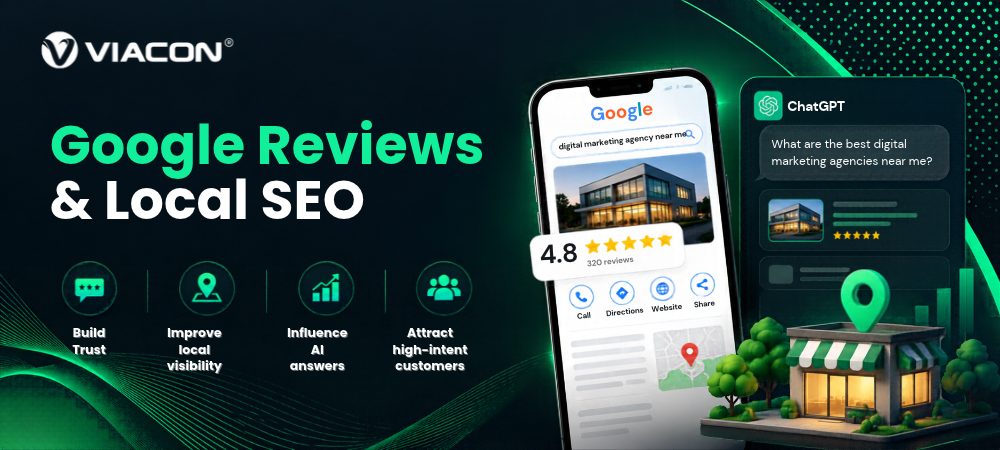
Local SEO gets your practice onto the map. Reviews decide whether patients act on it, and both feed directly into your broader reputation management efforts. Search engines read review volume, rating, recency, and response rate as local trust signals, and patients read the same signals to decide whether to call. A profile with stale reviews sitting at a 3.9 average loses to a competitor with fresh, well-managed feedback, even when the underlying care is identical.
Did you know: Recent survey data from Birdeye’s State of Online Reviews puts the share of patients who read reviews before choosing a provider at 87%, with most saying they won’t seriously consider a practice rated below four stars.
Build review generation into the patient visit itself. Automated post-visit requests sent by text or email a few hours after the appointment consistently outperform a front-desk sign. Spread requests across Google, Healthgrades, and specialty-specific platforms, but weight the effort toward Google, since it’s both the most-used platform and the one with the most direct ranking influence.
Respond to every review, not only the negative ones. A reply to a critical review needs care: acknowledge the concern, move the conversation offline, and never confirm or discuss a patient’s treatment details in public. HIPAA governs how you talk about patients publicly just as much as it governs intake forms, and a reply that confirms someone was a patient can itself become a compliance problem.
For multi-location organizations, consistency matters as much as volume. Name, address, phone number, and service details must match exactly across your website, Google Business Profile, and every directory. A mismatched suite number or outdated phone number doesn’t just confuse patients; it tells search engines your information can’t be trusted, dragging down rankings across every location.
AI Search And AI Overview Optimization
Last but not least, healthcare brands have to optimize for AI search to remain visible in modern times. The reason is simple: modern search, driven by AI, is changing how users behave online, and you need to capitalize on that to be successful.
Now, there is no shortcut to AI success. Google’s guidance states that established SEO practices remain relevant because the generative search features draw on core ranking and quality systems.
Did you know: According to a recent survey, Google AI Overviews now appear on 51% of health-related searches.
However, you need to ensure you are not publishing large volumes of AI-produced content. Because the E-E-A-T parameters are strictly enforced in this industry, every piece of content you publish must provide original value, such as clinician commentary, care pathways, facility-specific capabilities, preparation instructions, or explanations based on real patient concerns.
International Healthcare SEO: More Than Just Translation
If your healthcare organization caters to international patients, then it opens a different facet of modern healthcare SEO. While the initial approach was to just translate the content into the regional language, that won’t work currently.
Right now, as AI search engines are focusing more on content quality, you need to focus on adopting local vocabulary, using the correct currency and phone number formats, the inquiry process, insurance availability, and travel information.
Also, you should use country- and language-specific experiences using appropriate URLs and hreflang implementation.
The International Pages Can Also Explain:
- Remote consultation options
- Visa or supporting-document processes
- Estimated length of stay
- Interpreter availability
- Airport transfers and accommodation support
- Follow-up care after the patient returns home
Compliance That Protects Rankings, Not Just Legal Exposure
Two compliance areas rarely make it into healthcare SEO plans, yet both can undercut everything else if ignored.
HIPAA-safe measurement. A standard GA4 setup, deployed the way it would be on any e-commerce store, can create real HIPAA exposure. When a tracking script captures an IP address alongside a visit to a condition-specific page, or logs form-field data from an appointment request, that combination can qualify as protected health information under current HHS guidance.
Google does not sign a Business Associate Agreement for standard GA4 use, so any setup that could capture PHI needs safeguards before launch, not after an audit flags it. Fixing this means auditing every tool that touches the site (analytics, chat widgets, call tracking, on-site search, ad pixels) for what it collects, using BAA-willing vendors, stripping identifying URL parameters, and routing sensitive events through server-side tagging rather than client-side scripts.
Accessibility. ADA website lawsuits have climbed for years, and healthcare ranks among the most targeted industries, largely because patient portals, intake forms, and schedulers are exactly the interactive elements that trigger complaints. Lawsuit-tracking data recorded over 5,000 digital accessibility filings in 2025, up roughly 37% year over year, with healthcare claims growing even faster.
Meeting WCAG 2.1 AA (proper heading structure, alt text on clinical images, keyboard-accessible forms, sufficient contrast, captioned video) closes off real legal risk and overlaps with what search engines reward: clean structure, speed, and usability. An overlay widget alone doesn’t satisfy this; real compliance requires code and template fixes.
Treat both as standing items in your technical audit cycle, alongside Core Web Vitals and schema validation not a substitute for sign-off from legal or compliance.
Measuring What Matters: KPIs, Timeline, And Cost
Traffic is not a result. It’s an input. A healthcare SEO program should be judged on what happens after someone lands on the site, not how many people arrive.
Metrics Worth Building A Dashboard Around:
- Qualified Inquiries, not raw form fills. An appointment request weighs more than a newsletter signup.
- Cost Per Booked Appointment, tracked by channel, so you know what organic search delivers relative to paid campaigns.
- New Patient Acquisition Cost is kept separate from returning-patient activity, since blending the two hides the real number.
- Show Rate, because a booked appointment that never happens isn’t a result either.
- Rankings And AI Overview Visibility for keyword clusters tied to your highest-value services, tracked separately from vanity terms that don’t convert.
Set these up before the SEO work starts, not three months in. Call tracking, HIPAA-compliant form analytics, and a CRM that can attribute a booked patient back to an organic landing page make the difference between a program you can defend to a CFO and one you can only describe in adjectives.
Timeline: Healthcare SEO compounds; it doesn’t spike. Most practices see early movement, like impressions and long-tail rankings, within two to three months. Meaningful gains in qualified traffic and bookings typically build over six to twelve months, with the strongest returns showing up in year two. Anyone promising page-one rankings in thirty days is either overpromising or risking the site with unsafe tactics.
Cost:Budgets vary with practice size, location count, and market competitiveness. A single-location practice in a low-competition market can run a credible program for a few hundred dollars monthly; a multi-location group in a dense metro should expect low five figures monthly. What matters more than sticker price is cost per booked patient over twelve months versus paid channels — organic typically wins once content matures.
Common Mistakes That Quietly Cap Growth
A handful of patterns show up again and again in healthcare SEO audits, and each one is straightforward to fix once it’s spotted:
- One Page Trying To Cover Five Services: A practice that stacks primary care, urgent care, and three specialties onto a single “Services” page makes it hard for any of them to rank. Each service or condition needs its own page.
- Stale Content With No Visible Update Date: A treatment page written two years ago and never revisited signals to patients and search engines alike that the information might be outdated, even when it isn’t.
- Generic, Duplicated Location Pages: Copying a location page and swapping the city name doesn’t create genuine local relevance, and search engines increasingly recognize the pattern.
- Reviews Left Unmanaged: No request process, no responses, ratings drifting down while a competitor down the street actively manages theirs.
- No Conversion Tracking: Without call tracking and form attribution, there’s no way to tell which pages actually produce patients versus which ones just produce traffic.
- Jargon Over Clarity: Content written for peer review, not for a worried patient trying to understand a diagnosis at 11 p.m.
- Mobile Is Treated As An Afterthought: With most healthcare searches now happening on a phone, a slow or clumsy mobile experience costs more conversions than almost any single ranking factor.
None of these is an exotic problem. They’re the reason two practices with comparable clinical quality can post wildly different search performance.
Why Viacon Is The Right Healthcare SEO Agency?
The discussion so far has made one thing clear: healthcare SEO is different. The expectations, compliance, and most importantly, the nature of the business, mean it needs a lot more care. Care of what you say, what you claim, and what you offer.
That’s why you need the right partner, one that has the SEO expertise and, more importantly, the experience of managing healthcare clients to deliver what you need. Steps in Viacon, a leading healthcare SEO agency.
At Viacon, we approach SEO services for healthcare as a patient acquisition and trust-building system, not a collection of isolated ranking tactics.
Our Approach Brings Together:
- Proven healthcare SEO frameworks aligned with patient search journeys.
- Technical SEO expertise for crawlability, site architecture, performance, and structured data.
- Local and global SEO capabilities for individual clinics, multi-location groups, and international providers.
- Content cluster methodology connecting conditions, treatments, procedures, specialists, and locations.
- Compliance-aware execution, including HIPAA-safe analytics and WCAG-aligned accessibility, is built into the plan rather than bolted on after a complaint.
- Authority development through digital PR and clinically credible link building, aimed at .gov, .edu, and journal-grade sources rather than link farms.
So, if you are not satisfied with your current SEO performance or want to promote your new clinic, then get in touch with us. Let’s start with a free audit and then work together to bring the success that your vision deserves.