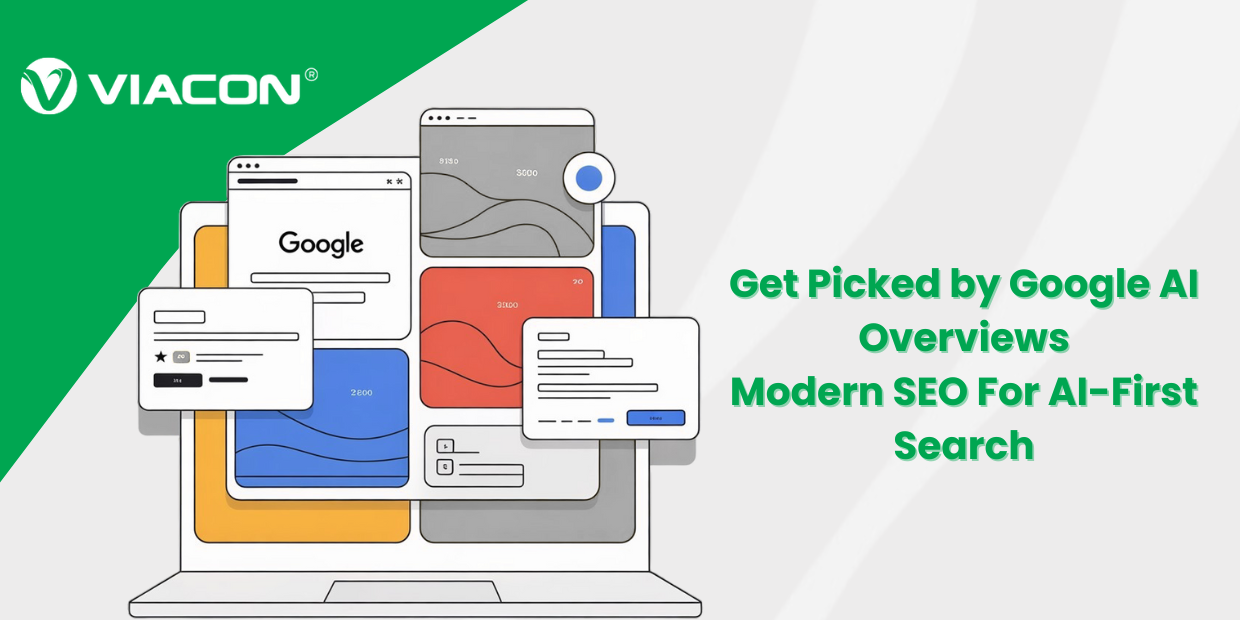
Did you know? Google AI Overviews now appear in 30% of U.S desktop searches in September 2025. It is up from 10% in March 2025, representing a staggering 492% surge and impacting SEO visibility and traffic benchmarks.
Recent AI visibility studies also show that informational queries, comparison searches, and problem-solving searches are among the biggest triggers for AI-generated answers. This means brands can no longer rely only on traditional ranking positions because visibility now begins before the click itself.
As a result, Google search is not behaving like it used to. Now, users type a query, and before they even reach the usual list of websites, the search engine may already give them a summarized answer, quick, detailed, and with room for further follow-ups. As a result, people often do not feel the need to click right away.
That is where Google AI overviews come into play, and yes, they are changing the way SEO teams think. But this is not one of those “SEO is dead” moments. It is just being pulled into a more demanding phase where ranking still matters, but it is no longer the whole story.
Brands now need to be useful, credible, and clear enough to be included in AI-generated search experiences. That is the shift, no panic, no hype, and just a different kind of work.
This is also why SEO vs AEO vs GEO discussions are becoming more important, because modern search visibility is no longer only about rankings, but also about becoming part of AI-generated answers and conversational search experiences.
Examples Of Google AI Overviews In Real Searches
Here are some common searches where Google AI Overviews frequently appear:

Industries seeing the highest AI Overview activity include:
- SaaS
- Healthcare
- Finance
- Technology
- Education
- Marketing
- Ecommerce comparisons
These examples highlight how AI-generated answers are shaping search visibility before users even click into websites.
What Are Google AI Overviews?
If the question is what Google AI overviews are, the simple answer is this: They are AI-generated summaries that appear in Google Search to help users understand a topic faster. Instead of only showing a list of pages, Google can now synthesize information from different sources and present a short explanation, often with supporting links for deeper reading.
These AI summaries are not the same as featured snippets. A featured snippet usually pulls a short answer from one source. AI Overviews are broader; they can combine definitions, explanations, steps, warnings, comparisons, and related context into a single answer.
That makes them more powerful, but also more selective. Today, Google is not just looking for a keyword match; it is trying to understand which sources can best explain the topic.
This is why visibility on AI generated answers from Google is important for brands. They sit at the point where opinions are formed. A user may not know which company to trust yet; they are still learning, and if your content helps shape that learning moment, your brand has already entered the conversation before the click happens.
Google AI Overviews vs Featured Snippets

This distinction matters because AI Overview optimization requires more than ranking alone. Content must also demonstrate clarity, authority, and contextual usefulness.
| What Headings And Answer Lengths Work The Best For Google AI overviews? In terms of headings, descriptive and question-based headings work the best for AI overviews. After that, you should directly address the topic, followed by supporting details that explain the concept as clearly and concisely as possible. Apart from that, short paragraphs, bullet points, and numbered lists further enhance the chances of citation on AI overviews. |
Short answer blocks between 40 and 60 words also perform better because they are easier for search systems to summarize and reuse in AI-generated responses.
How AI Overviews Work In Google Search?
To understand how AI overviews work, start with intent. Google first tries to understand what the user is really asking: Is the person looking for a definition, a comparison, a process, a recommendation, or a deeper explanation?
After that, Google looks for useful information across its index. The system may refer to pages that explain the main topic, clarify a subtopic, and answer a related follow-up question. This is where content depth matters.
A page that only repeats surface-level points may rank somewhere, but it may not be useful enough to support an AI-generated explanation.
Then comes the synthesis. Google turns scattered information into a readable answer. The result may include a paragraph, a list, a comparison, or a sequence of steps. This is one reason content structure matters so much now.
If your page has clear definitions, logical sections, and direct answers, it becomes easier for systems to interpret and summarize your content without losing the meaning.
| Stage | What Happens | What Your Content Should Do |
| Query Understanding | Google interprets the intent behind the search. | Match real user questions, not only keywords. |
| Source Selection | Google looks for relevant indexed pages. | Make the page crawlable, useful, and well structured. |
| Answer Synthesis | Information is combined into an AI-generated response. | Use clear explanations, examples, and concise sections. |
| Supporting Links | Google may show sources for deeper exploration. | Build trust signals, topical authority, and strong internal links. |
This is the new reality of AI search in Google, where search is becoming less about matching strings of words and more about understanding topics, entities, and usefulness. While that sounds obvious, many SEO strategies still behave like the old game is fully intact.
Search Intent Types That Trigger AI Overviews
Different search intents trigger AI Overviews differently. Informational and educational searches currently dominate AI-generated answers.
| Search Intent | AI Overview Likelihood |
| Informational queries | Very high |
| How-to searches | Very high |
| Comparisons | High |
| Product reviews | Moderate |
| Transactional searches | Lower |
| Local searches | Moderate |
Examples:
- What is semantic SEO?
- Best project management software for startups
- How to improve topical authority
- Difference between SEO and AEO
Understanding intent categories helps brands structure content around how users actually search.
| Does Structured Data Help Rank In Google AI Summaries? Now, structured data doesn’t directly improve the number of content citations in Google AI summaries. However, it helps AI bots understand the content better, which, in turn, improves eligibility when combined with authoritative content, clear structure, and strong topical relevance. |
Additionally, schema helps clarify:
- Authorship
- Article type
- FAQs
- Product details
- Review information
- Organizational relationships
This improves semantic understanding for AI-driven search systems.
Why Google AI Overview SEO Matters?
Google AI overview SEO is not a separate universe from traditional SEO; it is more like an extension of it. Therefore, the basics still matter, which include technical accessibility, indexability, content quality, page experience, internal linking, structured data, and content authority.
While they are still part of the equation, the difference is that the content must now be more explanation-ready.
Now, think about it this way: a traditional ranking page can sometimes get by with decent formatting, target keywords, and a few useful sections.
But a page that wants to appear in AI-generated answers must work harder. It needs to clearly answer the search intent, show why it should be trusted, and address the questions that naturally follow.
So, what does it mean for the brands? This shift changes how visibility should be measured by modern SEO services. The summit of Google organic ranking is still valuable, of course.
But being cited, mentioned, or used as a supporting source in an AI Overview can influence users earlier in the journey. This matters especially in categories where people research before they buy, compare before they decide, and ask several questions before reaching out.
| Traditional SEO Focus | AI Search Optimization Focus |
| Ranking for target keywords | Becoming a trusted source for topics |
| Optimizing title tags and headings | Structuring content for clear answers |
| Building backlinks | Building authority, mentions, and topical depth |
| Writing for clicks | Writing for understanding and trust |
| Tracking rankings and traffic | Tracking visibility, citations, engagement, and assisted conversions |
This is why AI search optimization should not be treated as a buzzword. It is a practical content discipline that asks a harder question: If Google had to summarize this topic, would our content be useful enough to help?
The Role Of Entity SEO And Semantic SEO In AI Search
Google AI search increasingly relies on entities rather than exact-match keywords. This means Google is trying to understand people, brands, concepts, and their relationships instead of only matching repeated phrases.
That is why Entity SEO is becoming a critical part of modern AI search optimization, helping search engines connect brands with relevant topics, industries, and semantic relationships more accurately.
For example:
- AI search optimization
- Answer engine optimization
- Semantic SEO
- Google AI Overviews
may all belong to the same topical ecosystem.
This is why topical authority matters so much. Brands should build supporting pages, explainers, glossaries, FAQs, service pages, and related resources that reinforce semantic relationships.
Strong Entity SEO Helps Google:
- Understand expertise
- Identify topical depth
- Connect related concepts
- Associate brands with industries
- Improve contextual relevance
In AI search, context is becoming just as important as keywords.
How To Optimize For Google AI Results?
To optimize for Google AI results, brands need to stop treating content as a container for keywords. That habit is still very prevalent in content planning and creation. But AI search raises the standard and demands that content be useful on its own, easy to interpret, and strong enough to stand alongside other credible sources.
So, on to the main question: How to optimize content for Google’s AI Overview results?
Well, you can certainly start by presenting a direct and appropriate answer. That means you need to refrain from presenting a vague introduction that circles the topic for three paragraphs.
Instead, you give the reader a clear explanation early and then build depth by adding context, examples, comparisons, and practical implications.
This approach creates a better user experience and gives search systems cleaner data to understand. Moreover, the page should feel as if it were written by someone who has actually thought about the problem.
Having said that, content structure still matters, but not in a mechanical way. Here, the focus should remain on using question-led sections when they make sense, adding definitions when the topic requires them, and using tables to simplify comparisons.
Additionally, using bullet pointers is also encouraged, but not for every idea, because too many bullets can make the article feel thin, like a deck pretending to be a blog. The better approach is a mix of editorial analysis and scannable sections.
A Few Practical Moves Help:
- Answer the main query within the first few paragraphs.
- Use H2S and H3S that reflect real search intent.
- Add examples that show experience, not just theory.
- Include author details, reviewer notes, and updated dates.
- Use schema where relevant, especially Article or BlogPosting schema.
- Link internally to related content that expands the topic.
Beyond all this, the bigger point is credibility. If everyone is publishing the same rewritten explanation, Google has no strong reason to choose one source over another.
And that’s why original insight becomes a real advantage, which can come from a client’s example, a framework, a checklist, a teardown, a process, or a sharper editorial perspective.
| Not everything needs hard data. But everything needs a reason to exist. |
Step-by-Step AI Overview Optimization Workflow

Technical SEO For AI Search Optimization
Technical SEO remains critical for AI search visibility.
Even strong content may struggle if search systems cannot properly crawl, render, or interpret the page.
Important Technical Optimization Areas Include:
- Crawlability
- Mobile usability
- Page speed
- Clean HTML structure
- JavaScript rendering
- Canonical optimization
- Indexability
- Structured data validation
- Internal linking depth
- Semantic heading hierarchy
Brands Should Also Regularly Audit:
- Broken pages
- Redirect chains
- Orphan pages
- Duplicate content
- Schema errors
Technical clarity helps AI systems process and understand content more efficiently.
The Complete AEO Content Framework
A strong Answer Engine Optimization strategy usually combines:
| Component | Purpose |
| Intent Mapping | Match real user questions |
| Semantic SEO | Build topical depth |
| Entity Optimization | Improve contextual understanding |
| Structured Content | Improve readability and summarization |
| E-E-A-T Signals | Build trust and credibility |
| Technical SEO | Improve crawlability and indexation |
| Internal Linking | Build authority relationships |
| Freshness Updates | Maintain relevance |
This framework helps brands improve visibility across both traditional search and AI-generated experiences.
How To Rank In AI Overview?
The phrase how to rank in AI overview sounds simple, but the answer is not, because there is no guaranteed switch, and no special tag that forces Google to include a page. Conversely, the better framing is this: How can a brand improve its chances of being understood, trusted, and selected as a useful source?
To start with, the page must be technically accessible. If Google cannot crawl it, render it, understand it, or show a snippet from it, the page is already out of the race.
Then comes relevance, where the content should answer the target question directly and also cover the natural follow-up questions around it. Since AI Overviews often work across subtopics, shallow pages usually struggle.
Second, the page needs authority signals. This does not mean stuffing the article with credentials; it means making expertise visible. Who wrote it? Why should the reader trust them? What sources, experience, or process shaped the article?
If the page feels anonymous, generic, or mass-produced, it becomes harder to trust. And in AI search, trust is not decoration. It is part of the product.
Third, freshness matters when the topic changes quickly. AI search, search behavior, and Google interfaces are moving fast. A blog published once and ignored for two years may slowly lose usefulness. Therefore, updating content with new sections, clearer explanations, and better internal links is not cosmetic. It is maintenance for relevance.
Real-World Patterns Observed In AI Search Optimization
Across multiple industries, several recurring patterns appear in pages that receive stronger AI visibility:
- Content that answers questions directly tends to perform better.
- Topic clusters outperform isolated blogs.
- Pages with stronger internal linking structures gain broader contextual authority.
- Experience-based insights improve trust signals.
- Comparison tables and concise summaries improve citation potential.
- Updated content performs better in fast-moving industries.
These patterns reinforce the idea that AI visibility depends on usefulness, clarity, and topical trust rather than keyword repetition alone.
What Content Format Ranks Best On Google AI Overviews?
The content format that proves to be the champion in Google AI Overviews is the one that offers clear, informative content that explains, not just sells. Therefore, the likes of step-by-step guides, comparisons, breakdowns, and problem-solution content find the most success in this new format of search.
Formats That Frequently Perform Well Include:
- Tutorials
- Comparison articles
- Glossary pages
- FAQs
- Industry explainers
- Checklist-based guides
- Process frameworks
- Educational long-form content
How To Track Google AI Overview Visibility?
As AI-generated search becomes more common, brands need new ways to measure visibility.
Some Practical Tracking Methods Include:
- Monitoring branded search growth.
- Tracking CTR changes in Google Search Console.
- Measuring assisted conversions.
- Monitoring engagement metrics.
- Tracking AI Overview citations manually.
- Watching impression growth for informational queries.
Several SEO tools are also introducing AI visibility features, including:
- Semrush AI Toolkit
- Ahrefs AI visibility tools
- Profound
- ZipTie
These tools help identify whether content appears in AI-generated answers and how visibility changes over time.
Common Google AI Overview SEO Mistakes To Avoid
The rising demand for Google AI Overview in SEO means every brand is chasing it, and quite naturally, that is leading to a series of mistakes that are disrupting the broader marketing efforts.
Here Are Some Of The More Common Such Errors That Brands Can Avoid:
Treating AI Search As Only A Technical Problem: Schema, clean HTML, and fast-loading pages help, but they cannot rescue weak content. If the article does not explain the topic better than what already exists, its visibility potential stays limited on Google AI overviews.
Publishing Thin Or Generic Content: AI search needs clear, useful, and well-developed answers. Surface-level writing that repeats common points without adding insight, examples, or context is unlikely to stand out.
Over-optimizing Keyword Usage: Repeating the keywords without context and relevance too often will not make the content more credible. It may make the writing feel forced and unnatural.
Forcing Secondary Keywords Into Awkward Sentences: Similarly, the secondary keywords should also appear only where they fit naturally. Not writing sentences that sound like they were built around a keyword to optimize for Google AI results certainly helps.
Ignoring Topical Authority: One blog cannot carry an entire AI search strategy. Brands need supporting pages, related explainers, FAQs, service pages, case studies, and internal links that build a broader content ecosystem.
Publishing Isolated Content Without Internal Links: A standalone article with no surrounding context may struggle to signal depth. AI search optimization rewards connected, well-organized content that helps users explore a topic fully.
Focusing On Ranking Instead Of Usefulness: The goal is not just to appear in search results. The content must be useful enough to help shape an AI-generated answer and credible enough to be trusted as a source.
A Practical Checklist For AI Search Optimization
| Question | Why It Matters |
| Does the page answer the main query early? | AI-generated answers need clear, direct explanations. |
| Is the content original enough to add value? | Rewritten summaries rarely stand out. |
| Are the headings based on user intent? | A clear structure helps both readers and search systems. |
| Is the author or reviewer visible? | Trust improves when expertise is transparent. |
| Does the page include useful internal links? | Topic clusters help build contextual authority. |
| Is the page updated when the topic changes? | Freshness matters for fast-moving search topics. |
| Does the schema match the visible content? | Structured data should clarify, not misrepresent. |
Frequently Asked Questions:
A: No. Traditional SEO still matters, but visibility now also depends on usefulness, authority, and contextual clarity.
A: Yes. Backlinks still help establish authority and trust, especially when they come from relevant industry sources.
A: Yes. Comparison pages, buying guides, and educational product content can appear in AI-generated answers.
A: AI-generated answers can change frequently based on query intent, freshness, and content updates.
A: Yes. Smaller websites with strong expertise, topical relevance, and helpful content can still gain visibility.
Search Visibility Now Belongs To The Most Useful Source
The future of search is not only about ranking higher but also about being useful enough to be included in the answer. That is the practical meaning of Google AI overviews for marketers, founders, and content teams.
The page that wins is not always the loudest one, but often the clearest, most trustworthy, and the one that actually helps the user move forward.
For brands, this is a good moment to rethink content strategy before the gap gets wider. That is where Viacon can help, with SEO and content strategies built for how people search now, not how they searched five years ago.
If your brand wants to improve visibility across traditional search and AI-generated results, come connect with Viacon. Let’s build content that does more than rank; it becomes part of the answer.