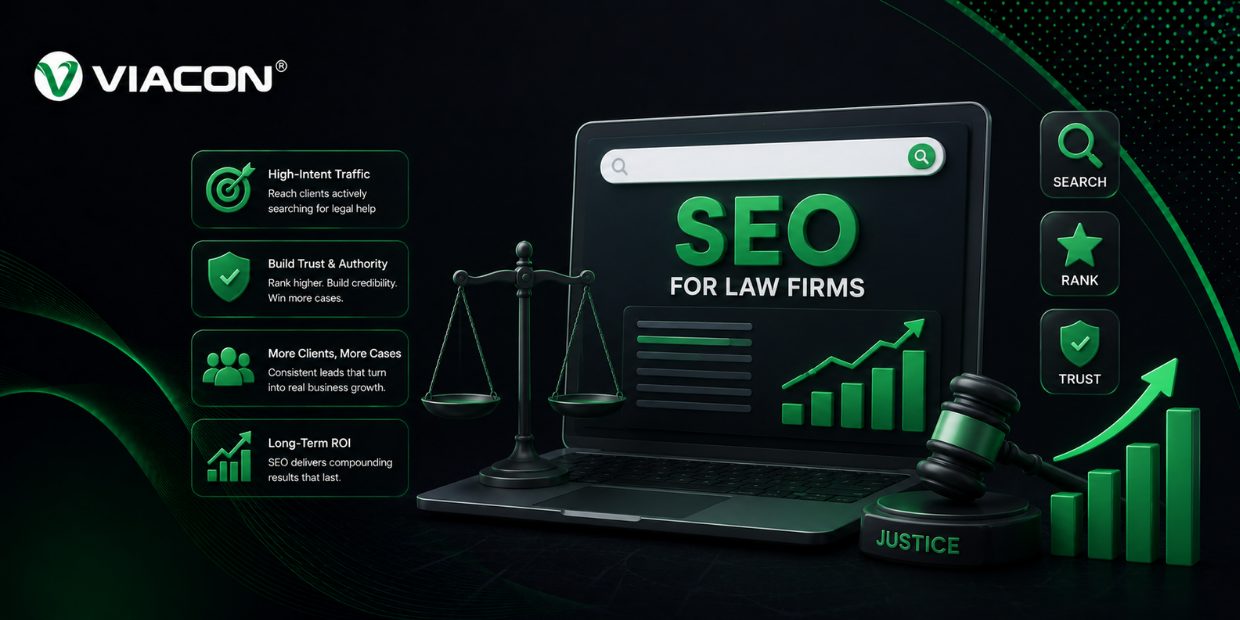
A decade ago, most law firms grew through referrals, word of mouth, and a listing in the local directory. That world is mostly gone. Today, someone who needs a lawyer pulls out their phone, types a question into Google, and decides who to call based on what shows up, often before they’ve spoken to a single person. That shift is exactly why SEO for law firms has stopped being optional and started being the deciding factor in who gets the client and who doesn’t.
The numbers back this up. Firms that stick with SEO consistently are seeing a 526% return on investment over three years, well ahead of any other marketing channel currently being tracked. But that number isn’t automatic. It only shows up once the actual work gets done: a technically sound website, content that genuinely helps people, a strong local presence, and the kind of authority signals Google now expects from legal content. Most firms get the strategy right on paper and then quietly skip the execution, which is usually why their SEO never compounds the way it’s supposed to.
This guide walks through why that shift happened, and more importantly, what a real, ranking-ready SEO program for a law firm actually looks like in 2026.
The 2026 SEO Reality Check: Why Organic Visibility Is No Longer Optional?
Algorithmic maturity, AI-assisted search, and shifting consumer expectations are reshaping how legal clients find and evaluate firms. Prospective clients want instant, clear answers, and search engines are increasingly built to surface only the most credible sources to meet that demand. Getting SEO for law firms right starts with understanding exactly what’s changed beneath the surface because a generic, one-size-fits-all SEO approach no longer holds up in a legal market this competitive.
1. Search Behaviour Has Permanently Shifted Paid Reach Alone Can’t Sustain Growth
Legal client acquisition has undergone a structural shift. Referral volume, directory calls, and pure advertising response rates have all softened. Today’s clients begin with an online search, and they evaluate a firm’s digital authority and credibility long before they ever pick up the phone.
Organic visibility is what captures the attention of these researching, comparison-driven users. Beyond that, SEO acts as connective tissue across the rest of the marketing stack; it influences ad performance, content rankings, and even how branding authority is perceived through reviews and referrals. Strip SEO out, and every other channel works in isolation and underperforms.
Stat watch: SEO-generated leads convert at roughly 7.5%, nearly 3X the conversion rate of PPC leads at 2.2%.
The compounding effect shows up most clearly in paid media costs. As organic visibility builds, dependency on paid campaigns drops, and overall acquisition cost falls with it.
| Do Law Firms Really Need SEO In 2026 If They Already Run Ads? Yes. Paid ads deliver short-term, rentable visibility; the moment spend stops, so does traffic. SEO builds a long-term, owned growth channel. Firms that run both typically use paid campaigns to validate messaging and capture immediate demand, while SEO compounds in the background and gradually reduces dependence on ad spend. |
2. How AI, GEO & Google’s New Search Experience Made SEO Non-Negotiable
The adoption of AI in search has introduced concepts like Search Generative Experience and Generative Engine Optimization, fundamentally changing how visibility works. Search engines are no longer simply ranking URLs; they’re synthesizing summarized answers directly into the results page.
In this environment, visibility depends on the structure and substance of the content a brand offers. Only well-structured, semantically rich, authoritative content qualifies for inclusion in AI-generated responses. For law firms, this is a critical shift: success no longer hinges on appearing on page one, but on becoming a source search engines and AI systems actually trust enough to cite. Firms exploring this shift in more depth often start by understanding how generative search engines select and cite sources before rebuilding their content strategy around it.
| Is SEO Still Effective After AI Search Updates? Yes, but its nature has changed. The focus has moved from keywords and backlinks alone to genuinely useful, well-structured content. Thin, promotional, or factually weak pages no longer qualify. Sites need depth and demonstrated trustworthiness to earn placement. |
3. Why Legal Content Faces A Higher Bar: Understanding YMYL
Most generic SEO advice doesn’t account for one critical fact: Google classifies legal information and legal services under its “Your Money or Your Life” (YMYL) category. YMYL content covers topics that can directly affect a person’s health, finances, safety, or legal standing — and Google applies meaningfully stricter quality and trust standards to it than it does to, say, a recipe blog or a product review site.
For law firms, this means the usual SEO shortcuts simply don’t work. A thin practice-area page with a phone number and a stock photo won’t compete. Content needs visible author credentials, accurate jurisdiction-specific information, transparent sourcing, and clear evidence that real legal expertise sits behind it. Skipping this step is one of the most common reasons legal sites plateau even after months of publishing.
4. Content Marketing Is The New Sales Funnel For Law Firms
With search behavior evolving, the traditional sales funnel has changed too. Clients now self-educate, compare firms, and only then make contact, arriving with far more context and clarity than they would have five years ago.
This means blogs, articles, whitepapers, FAQs, and select video content aren’t optional extras; they’re the new front door. A well-built content cluster that addresses a subject from multiple angles satisfies client queries, improves rankings, and aligns naturally with search intent. It also pre-qualifies leads by addressing complexities, timelines, and likely outcomes upfront, and firms reduce the volume of low-intent inquiries that eat up intake time.
| How Does SEO Content Actually Bring Qualified Legal Leads? It works by matching the information clients are actively seeking with the page that answers it. Technically, this is the outcome of keyword strategy, content structuring, subject-matter depth, and overall user experience. The client learns what they need to know, then feels confident enough to reach out. |
5. Authority Signals Matter More Than Keywords In 2026
The shift toward AI-summarized answers has diminished the standalone importance of keyword matching. Keywords still help search engines understand topic relevance, but quality, depth, and topical coverage now carry more weight.
Google Evaluates Content Quality Against The E-E-A-T Framework:
- Experience: The content must demonstrate first-hand experience with the subject.
- Expertise: The author must be a genuine subject-matter expert.
- Authoritativeness: The content earns recognition and citation from other reputable sources in the same field.
- Trustworthiness: The content is accurate, transparent, and reliable.
Content that satisfies all four signals tends to get treated as a dependable, expert-led source within its field, which is exactly the kind of content AI search systems pull from when a relevant query comes in.
A natural question follows: why does Google favor a trust ecosystem over a single standout page? Because Google’s broader goal is to improve the user journey end to end. That means it favors sites that cover a topic comprehensively across multiple, logically interlinked pages rather than one exhaustive article trying to do everything at once.
| How Does Google Decide Which Law Firm Websites To Trust? Primarily through the content itself. If a site clears the E-E-A-T bar, Google treats it as a credible, reliable source worth surfacing for relevant queries. |
6. SEO And Online Reputation Are Now One System
SEO and reputation management have converged into a single, interdependent system. Google actively monitors trust signals, reviews, testimonials, and branded search behavior when deciding which firms deserve visibility, which makes reputation a direct ranking input rather than a side benefit.
Modern SEO strategies now build in review-acquisition workflows that encourage consistent, authentic client feedback across platforms. These reviews don’t just support rankings; they reinforce credibility at the exact moment a prospective client is comparing firms. Testimonial-led pages have become high-performing assets in their own right. Unlike generic service pages, they carry social proof that reduces hesitation and pushes conversion forward.
| Do Google Reviews Really Impact SEO Rankings? Yes, especially for local SEO. Reviews boost local visibility, improve click-through rate, build trust, and give Google fresh, keyword-rich content to index. |
7. Local SEO, “Near Me” Searches & Google Business Profile Optimization
Local SEO has always mattered for legal firms serving regional clients, but in 2026 it’s a direct revenue driver, not just a visibility tactic. As prospective clients search with immediate, location-based intent, firms that show up fast and look credible win the click.
Stat watch: Customers are 2.7X more likely to consider a business reputable when they see a complete Business Profile.
A Few Specifics Matter More Than Firms Typically Realize:
- Primary Category Selection is one of the most influential and most commonly mishandled local ranking factors. Picking a broad or incorrect category weakens relevance signals before anything else even comes into play.
- NAP Consistency (Name, Address, Phone) across the website, Google Business Profile, and legal directories like Avvo, Justia, FindLaw, and Martindale-Hubbell reinforces entity trust. Inconsistent data creates friction in both map rankings and user confidence.
- Profile Activity, regular posts, updated photos, and prompt responses to every review signal an active, legitimate practice rather than a profile that was claimed once and abandoned.
Local SEO now connects content, maps, and reviews into a single conversion funnel: practice-area pages optimized for local intent, map visibility, and steady review signals guide users from discovery to decision with minimal friction.
| How Can Law Firms Rank Faster For Local Searches In 2026? By building trust and authority, fully optimizing the Google Business Profile (correct category, complete details, regular activity), publishing localized content, and delivering a fast, frictionless site experience. |
8. The Technical SEO Foundation Most Law Firms Skip
Authority and content only matter if Google can actually crawl, index, and serve the page quickly. Technical SEO is the unglamorous layer that determines whether everything else gets a fair chance to rank, and it’s where a surprising number of legal sites quietly lose ground.
The Core Pieces Worth Auditing:
- Core Web Vitals – Particularly Largest Contentful Paint (load speed) and Interaction to Next Paint (responsiveness). Slow, janky pages frustrate mobile users and signal a poor experience to Google.
- Mobile-first Indexing – Google indexes the mobile version of a site by default, and a meaningful share of legal searches happen on mobile, often during high-stress moments. A clunky mobile experience costs both rankings and conversions.
- Crawlability And Indexability – Broken internal links, orphaned pages, missing or misconfigured sitemaps, and accidental “noindex” tags quietly suppress otherwise strong content.
- Schema Markup – structured data (LegalService, Attorney, LocalBusiness, FAQPage) helps search engines and AI systems understand exactly what a page represents, which matters more as AI Overviews and generative answers become a larger share of search.
- Site Security And Consistency – HTTPS, clean redirects, and no duplicate content across near-identical location or practice pages.
Firms that haven’t reviewed these basics in a while are often better served starting with a structured technical and content audit before investing further in net-new content. Fixing a leaking foundation is almost always higher-leverage than adding more pages on top of it.
9. Keyword Research & Mapping Search Intent
Generic keyword targeting bidding everything on “divorce lawyer” or “personal injury attorney” leaves most of the real opportunity on the table. Legal search behavior breaks down into distinct intent categories, and each one belongs on a different type of page:
- High-intent, ready-to-hire queries (e.g., “car accident attorney in [city]”) belong on practice area and location pages.
- Informational Queries (e.g., “how long does a contested divorce take”) belong in blogs, FAQs, and resource content.
- Comparison/evaluation Queries are influenced heavily by reviews, authority signals, and Google Business Profile completeness.
- Branded/navigational Queries depend on reputation and consistency across directories.
A useful working formula for high-intent legal keywords is: [Practice Area] + [Legal Identifier] + [Location] — for example, “wrongful termination lawyer in Dallas.” But the bigger opportunity for most firms sits in long-tail, conversational queries that mirror how someone actually thinks during a legal crisis — questions like “what happens if I miss a court date” rather than a clipped two-word search.
These queries carry less individual volume but collectively represent a large, underserved share of real client intent, and they’re exactly the kind of specific, well-answered content that AI-generated summaries tend to pull from.
10. Practice Area Page Architecture That Actually Converts
One generic “we handle injury cases” page cannot do the job of five dedicated, specific pages. A personal injury firm needs separate, substantive pages for car accidents, slip and fall, medical malpractice, and wrongful death. A family law firm needs the same treatment for divorce, custody, and support modifications. This isn’t just an SEO formality — it gives Google a clear topical authority signal and gives prospective clients a direct, specific answer to their exact situation.
A Genuinely Strong Practice Area Page Typically Includes:
- A clear explanation of the legal problem and what’s actually at stake for the client.
- How the firm specifically approaches that type of case.
- Jurisdiction-specific details: relevant statutes, filing deadlines, local court procedures.
- Realistic outcomes, timelines, or case examples where appropriate.
- A clear, low-friction call to action.
This is also where a content clustering approach earns its value by building the supporting blog content, FAQs, and resource pages that all link back to the core practice page, rather than leaving each page to rank in isolation.
11. Link Building & Digital PR For Law Firms
Authority isn’t just demonstrated through on-page content; it’s reinforced by who else is willing to cite or link to a firm. For legal sites, the highest-value backlinks tend to come from bar association websites, reputable legal directories, press mentions, and earned coverage rather than low-quality, paid link placements.
Practical Avenues That Consistently Work:
- Legal directories – Avvo, Justia, FindLaw, Super Lawyers, and Martindale-Hubbell, all maintained with consistent NAP data
- Digital PR – Earning coverage by being quoted as a source in news articles on relevant legal topics
- Guest contributions to legal publications and industry sites
- Source request platforms (formerly HARO, now Connectively) for journalist-driven mentions
- Original research or data-backed content that other sites naturally want to cite
Quality outweighs volume here. A handful of relevant, earned links from credible legal or news sources will move the needle far more than a large batch of low-relevance directory submissions.
12. Common SEO Mistakes Law Firms Should Avoid
A few recurring mistakes quietly cap performance even when the broader strategy is sound:
- Keyword Stuffing – Repeating a target phrase unnaturally now reads as spammy to both users and Google’s systems, rather than helpful.
- Thin Practice Pages – A 200-word page rarely outranks established legal directories; depth and specificity win.
- Duplicate Or Near-duplicate Content across multiple location pages confuses search engines and dilutes relevance.
- Neglecting The Google Business Profile after the initial claim, an inactive profile reads as a dying one.
- Chasing Rankings Instead Of Intent — ranking for the wrong keyword brings traffic that never converts.
- Treating SEO As A One-time Project rather than an ongoing program that needs maintenance as algorithms and competitors shift.
13. Measuring SEO ROI: What 2026 Data Shows
Measuring SEO ROI for law firms now goes well beyond keyword position or raw traffic volume. The real focus is the impact across the full client acquisition journey from first visibility to final conversion.
The Key Indicators Law Firms Now Rely On For Performance Evaluation Include:
- Growth in branded and non-branded organic visibility.
- Engagement metrics such as time on page, scroll depth, and content interaction.
- Increases in qualified consultation requests and call volume.
- Assisted conversions influenced by organic search.
- Conversion rate improvements on SEO-optimized landing pages.
When viewed through this lens, SEO stops looking like a monthly expense and starts functioning as a business asset, one that compounds authority, captures demand, and lowers dependency on paid advertising over time.
| Is SEO Worth It For Lawyers Compared To Traditional Marketing? Yes. It’s cost-effective, highly targeted, measurable, and builds lasting authority in a digital-first market while also improving credibility and providing a durable competitive advantage. |
14. A Realistic SEO Timeline: What To Expect
One of the most common reasons firms abandon SEO too early is mismatched expectations. A realistic timeline looks roughly like this:
- Months 0–3: Technical fixes, foundational content, and Google Business Profile optimization. Visibility gains are usually modest at this stage.
- Months 3–6: Early movement on lower-competition, long-tail terms; initial qualified inquiries start trickling in.
- Months 6–12: Meaningful ranking gains and traffic growth, particularly for firms that stayed consistent rather than starting and stopping.
- Month 12+: Compounding returns rankings become harder for competitors to displace, and cost per acquisition typically continues to fall.
Firms that stop and restart SEO efforts repeatedly tend to see far slower, choppier results than firms that commit to steady, ongoing execution.
15. What Industry SEO Leaders Recommend for Sustainable Growth
Proven recommendations that experienced SEO practitioners consistently return to:
- Building topical authority through a comprehensive content ecosystem, not isolated pages.
- Prioritizing user intent, experience, and clarity over keyword density.
- Publishing expert-led, original content backed by real-world insight.
- Structuring content for AI-driven discovery, not just traditional rankings.
- Integrating SEO with reputation management, PR, and brand search demand.
- Measuring success by long-term business impact, not short-term ranking spikes.
A “quick ranking” approach can deliver temporary visibility, but it consistently underperforms over time, as algorithm updates and rising competition erode gains built on shortcuts. Expert-backed strategies, by contrast, align with how both search engines and users actually evaluate trust.
On the changing nature of SEO content, search intent alignment is increasingly treated as more important than even backlink volume. Content needs to match what the searcher is actually trying to accomplish, not just contain the right words.
Content depth, too, is no longer measured by word count alone but by completeness: does the page answer every reasonable follow-up question a reader might have? And the long-standing idea that length alone wins rankings is giving way to a stronger emphasis on user experience over sheer page size.
For law firms, the practical outcome is fewer algorithmic risks, higher-quality leads, and more durable growth, making a long-term SEO strategy not just safer, but significantly more profitable. Firms still relying purely on conventional tactics may want to look more closely at why traditional SEO alone is no longer sufficient heading into the next few years.
| What SEO Strategy Is Actually Future-proof For Law Firms? One that builds authority, relevance, and genuinely strong user experience across both traditional search engines and emerging AI-backed search systems rather than optimizing narrowly for either one. |
Why Viacon’s Approach To SEO For Law Firms Is Built For 2026 And Beyond
SEO in 2026 isn’t about isolated tactics or short-term visibility spikes; it’s about building durable growth infrastructure that compounds over years, not months. Law firms that treat SEO as strategic infrastructure rather than a marketing line item and align efforts with both user intent and the modern AI-backed search ecosystem are the ones positioned to benefit most.
From Traffic To Trust To Leads Viacon’s SEO Framework
Brands navigating this shift need a partner who treats SEO as part of a connected system rather than a single plan. Our approach centres on a content clustering method, where a legal subject is covered comprehensively through whitepapers, articles, blogs, and testimonials rather than one standalone page trying to do everything.
Beyond spreading information and establishing authority, the work extends into supporting credibility and conversion across multiple channels, with structured page testing folded in where it makes the biggest difference to lead quality.
Performance tracking stays focused on long-term revenue impact, visibility, and demand rather than short-term positional gains, a model built to keep law firms competitive well past 2026, including as AI-driven discovery channels continue to grow.
Why Should Our Law Firm Hire Viacon For SEO Services In 2026? See How Our Tailored SEO Strategies Have Helped Businesses Improve Search Visibility, Generate Qualified Leads, And Achieve Measurable Growth.
Download Our Case Study To Explore The Results.Viacon’s SEO Case Study Vidhikarya
Vidhikarya partnered with Viacon to solve a familiar problem: low visibility driven by misaligned keyword targeting and unresolved technical issues. Despite having existing traffic, the site struggled to generate consistent, qualified leads, with a Website Health Score of just 71% and limited authority signals.
The engagement shifted focus from low-volume, low-intent keywords to high-intent, service-driven legal searches across core practice areas including Cyber Law, Divorce & Matrimonial Law, Corporate Law, and POSH. This was supported by a comprehensive technical overhaul, improved internal linking, and authority-led content optimization designed for visibility in both People Also Ask results and Google AI Overviews.
In 6 Months, The Results Included:
- Website Health Score improved from 71% to 86%.
- Authority Score increased from 30 to 33.
- 20–25% growth in qualified legal inquiries.
- PAA keyword presence grew from 858 to 934.
- AI Overview visibility increased from 141 to 215 keywords.
Notably, traffic volume stayed roughly stable while inquiry quality and conversion rates improved significantly, demonstrating that intent alignment and topical authority, not raw traffic growth, are what actually drive sustainable SEO outcomes for law firms. More results like this are detailed across our published client work.
| What Makes Viacon Different From Other SEO Agencies For Law Firms? Direct, ongoing experience working with legal clients, specifically helping them climb the SERP ladder and earn placement in AI Overviews, while improving brand authority in ways that translate into a steady flow of organic leads and measurable revenue growth. |
Frequently Asked Questions:
A: Yes. Ads deliver fast, rentable visibility; SEO builds a long-term, owned channel that lowers acquisition costs over time. The strongest strategies use both.
A: Yes, though its mechanics have shifted from keyword/backlink focus toward genuinely useful, well-structured, trustworthy content.
A: By matching the exact information a client is searching for with a page built to answer it, pairing keyword strategy with real subject-matter depth and a clean user experience.
A: Primarily through how well the content satisfies the E-E-A-T framework: experience, expertise, authoritativeness, and trustworthiness.
A: Yes, particularly for local SEO, reviews boost visibility, click-through rate, and trust, and provide fresh content for Google to index.
A: By fully optimizing the Google Business Profile (correct primary category, complete details, regular activity), maintaining consistent NAP data, publishing localized content, and ensuring a fast, mobile-friendly site experience.
A: Yes, it’s measurable, cost-effective over time, builds lasting authority, and improves both credibility and lead quality more reliably than most traditional channels.
A: A proven track record with legal clients specifically, paired with a strategy tailored to each firm’s practice areas and market rather than a generic template.
SEO For Law Firms Requires A Long-Term Growth Strategy
SEO for law firms is no longer a channel that can be treated as optional or run on a “set it and forget it” basis. It now sits at the intersection of technical health, content depth, local presence, and reputation, and firms that build all four deliberately are the ones compounding visibility while competitors are still chasing rankings. If your firm’s website hasn’t had its technical foundation, content strategy, or local presence reviewed recently, a full audit is the most reliable starting point, and our team is glad to walk through what that looks like for your specific practice areas.