You want your brand to get visibility and traction, and you don’t want to rely only on SEO. Does that work? It sure does.
In fact, in 2026, you can’t rely only on SEO and expect your brand to appear everywhere on the search engine. Building brand authority has become just as important as optimizing keywords and earning backlinks. In today’s search landscape, SEO alone isn’t enough to build your brand. Yes, you’ve read that right.
We’ve seen brands build backlinks, optimize keywords, and publish content and still be stuck on the third page. No knowledge panel, no citations on Google AI overviews, and no clicks that convert.
If you want Google to reward your brand with visibility, you have to get Google to trust it. It starts with getting entity recognition, brand mentions across the web, consistent information, citable and structured content, knowledge graph connections, and strong entity SEO.
What Is Brand Authority In Google?
Brand authority isn’t a single score. It’s how Google perceives your brand across the entire web. It’s not MOZ DA, DR, traffic, or the number of backlinks. Instead, it’s built through mentions, profiles, content, entity relationships, and consistency over time.
Strong brand authority helps your business earn visibility not only in Google Search but also across AI search engines such as ChatGPT, Gemini, Perplexity, and Google AI Overviews, where trust and entity recognition play a critical role in citations and recommendations.
Is Google Brand Authority Different From Domain Authority?
Brand authority on Google and domain authority are often confused. Domain Authority measures how strong your website is as a link source. Brand Authority measures how well Google recognizes your brand as a real, credible entity across platforms.
In Short:
- Brand authority on Google is how the search engine sees you.
- Domain authority is a score given by tools like MOZ based on your backlink profile.
You could have a DA of 60 and still have weak brand authority if Google doesn’t truly “know” who you are.
Why Authority Influence Search Visibility?
Google’s AI Overviews and Knowledge Panels are increasingly reserved for brands that Google trusts. If your brand isn’t recognized as a legitimate entity, you won’t show up there, no matter how well your pages rank individually.
What Are Some Good Examples Of Strong Brand Entities On Google?
Some good examples of brand authority would be HubSpot, Moz, Nike, Amazon, Apple, and Ogilvy. When you Google any of these brands, you’re likely to see a Knowledge Panel, AI mentions, consistent visibility across different digital platforms, and blue links on the top page.
Now compare that to lesser-known brands in the same industry, and you’ll see them either lacking better SEO or being inconsistent across AI search platforms. The difference in how Google treats them is stark.
Why Is SEO No Longer Enough For Building Brand Authority?
Google’s AI Overviews don’t pull from keyword-optimized blog posts the way traditional search does. They pull from the Knowledge Graph, which is a database of entities, relationships, and trusted sources. If your brand isn’t in that graph, you’re missing from the conversation entirely.
What Does Google’s Entity-First Approach Stand For?
Google has been moving toward understanding “things” rather than just matching words for years. Your brand needs to exist as a recognized entity with clear attributes: a name, description, founders, products, and topic associations.
Trust Signals Beyond Website Rankings
Keywords and backlinks no longer build brand authority. It’s the trust signals, brand mentions, structured press coverage, and E-E-A-T compliance that’s behind visibility nowadays.
Google evaluates founder credibility, third-party mentions, and whether your brand appears in authoritative directories.
Even unlinked brand mentions send real signals. So, if you want to build brand authority without traditional SEO (keyword optimization, backlinking, and on-page content creation), then that’s the way to go.
The Growing Importance Of Digital Presence
Digital presence isn’t one-dimensional anymore. You can’t have a brand appear on Instagram and forget X, LinkedIn, or other social platform presence.
Most importantly, building an authority search engine now demands a strong presence on LinkedIn, Wikidata, or Crunchbase to power AI visibility. These platforms act as reference points that confirm your brand is real.
How Does Google Determine Brand Authority?
Google prioritizes more than SEO to reward your brand with the visibility it deserves.
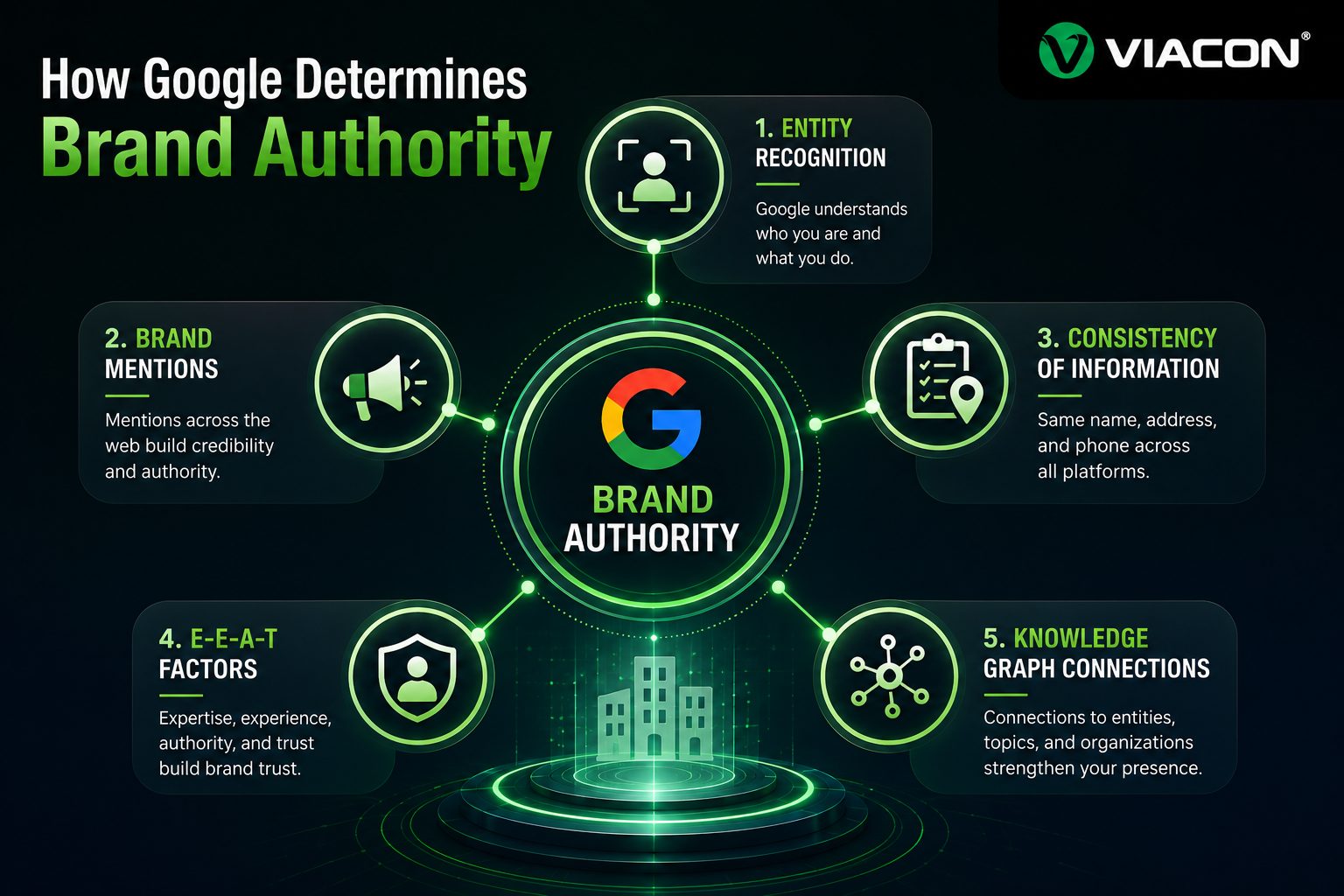
(i) Entity Recognition
Google maps your brand with attributes and relationships, your name, what you do, and who founded it. All of this feeds into how Google understands and represents you.
(ii) Brand Mentions Across The Web
Both linked and unlinked mentions contribute to how Google perceives your authority. A Forbes mention without a backlink still matters. It tells Google your brand is being talked about in credible spaces.
(iii) Consistency Of Information
NAP consistency, your Name, Address, and Phone need to be identical across every platform. Even small variations can dilute your entity signals.
(iv) E-E-A-T Factors
Founder credibility, employee expertise, and thought leadership content all feed into Google’s brand trust score. A CEO with a strong LinkedIn presence and published industry insights adds real weight.
(v) Knowledge Graph Connections
The more your brand connects to other recognized entities, industry topics, partner organizations, and notable people, the stronger your position in Google’s Knowledge Graph becomes.
By now, it should be clear that SEO alone doesn’t help you build brand authority. It takes a series of diverse planned actions that include your business in the Google Knowledge Graph.
Not Sure If Your Brand Meets Google’s Recognition Parameters? Try This Free Brand Authority Checklist By Viacon.
Download Free Brand Authority ChecklistHow To Build Brand Authority Without Relying Only On SEO?
Here’s how you can build brand authority without relying on traditional SEO:
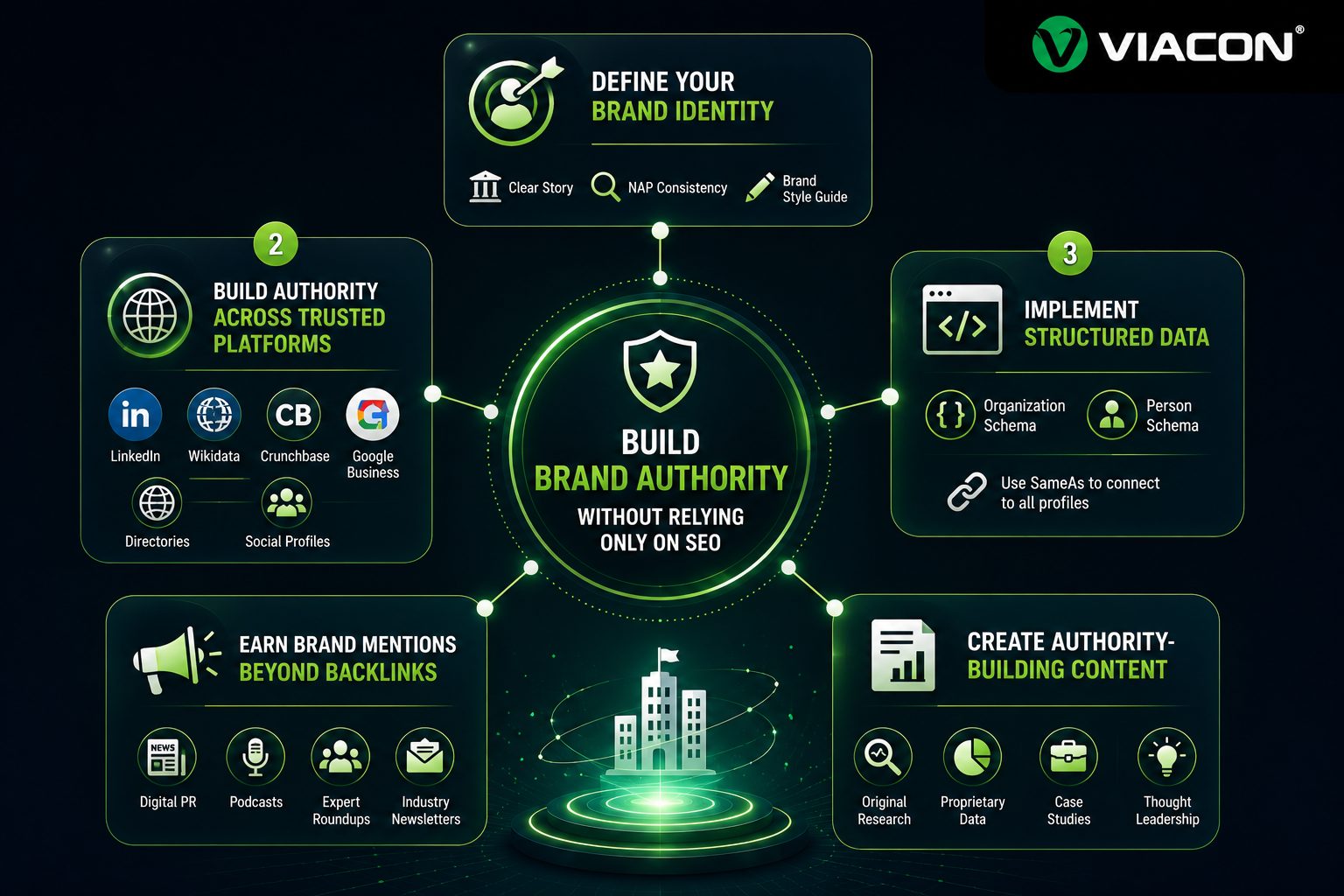
1. Define Your Brand Identity First
A clear brand story starts with defining your identity. That’s where your NAP consistency is the top priority. You must build a specific ‘About Us’ page telling what your brand stands for and what you do. Then, focus on a simple brand style guide; standardizing your name format and messaging across platforms is worth the effort.
2. Build Authority Across Trusted Platforms
A 360-degree visibility is what makes your brand a whole entity. Start by building your visibility on LinkedIn, Wikidata, Crunchbase, and Google Business Profiles. These are some reference points for Google to read and help you get cited on AI overviews.
However, it doesn’t end there. Diversify the words about your brand across other niche-relevant websites and business directories. Also, don’t forget your social profiles. However, incomplete social profiles don’t do much good.
3. Implement Structured Data (Schema Markup)
Schema markup is how you speak to Google in its own language. Add the Organization Schema and use the SameAs property to connect it to all your external profiles. Person Schema for founders helps Google build a richer picture of your entity.
4. Earn Brand Mentions Beyond Backlinks
You’re reaching out to publishers, brands, and businesses to build backlinks. Good. But let’s not stop there. In today’s AI-first search landscape, editorial mentions matter more than you’re giving credit for.
As for how to do it, run digital PR campaigns, pitch yourself for podcasts, and expert roundups. Getting a well-known industry newsletter to reference your research is exactly the kind of visibility that builds authority quietly.
5. Create Authority-Building Content
Whether you’re in the fintech industry, manufacturing tires, or running a legal marketing agency, you could come up with some content ideas. Sure. You can research keywords and publish 5 blog posts a month to get the traffic flowing.
But is that building your brand? This is where you start looking inside your business and into the market. Then, build your content takeaways on top of original research, proprietary data, detailed case studies, and thought leadership. When your brand publishes something others cannot replicate, that’s the uniqueness Google rewards.
Not Sure If Your Brand Has Strong Entity Signals?
Book a free 15-minute Brand Authority audit with Viacon
Common Mistakes That Kill Brand Authority
Avoid the following common mistakes that could kill your brand authority even before it starts to show up on search:
- Focusing Only on Backlinks: Links still matter, but treating them as your only strategy is a mistake. Entity signals are playing a bigger role in how Google evaluates brands.
- Inconsistent Brand Information: Different names or logos across platforms create confusion. Google struggles to connect the dots, and your entity signals get diluted as a result.
- Ignoring Entity Platforms: Skipping Wikidata, having a bare-bones LinkedIn Company Page, or not listing on Crunchbase leaves a real gap in your entity footprint.
- Weak About Pages: A generic “passionate team of experts” About page tells Google nothing useful. Name your founders, describe your expertise, and explain what makes your brand specifically qualified.
- Publishing Generic Content: Filler content that rehashes what everyone else has already published doesn’t build authority. Original research and genuine insight are what earn your brand real citations.
Measuring Brand Authority Growth
Now, all the effort aside, when it comes to measuring if your efforts count, look out for the following metrics and signs:
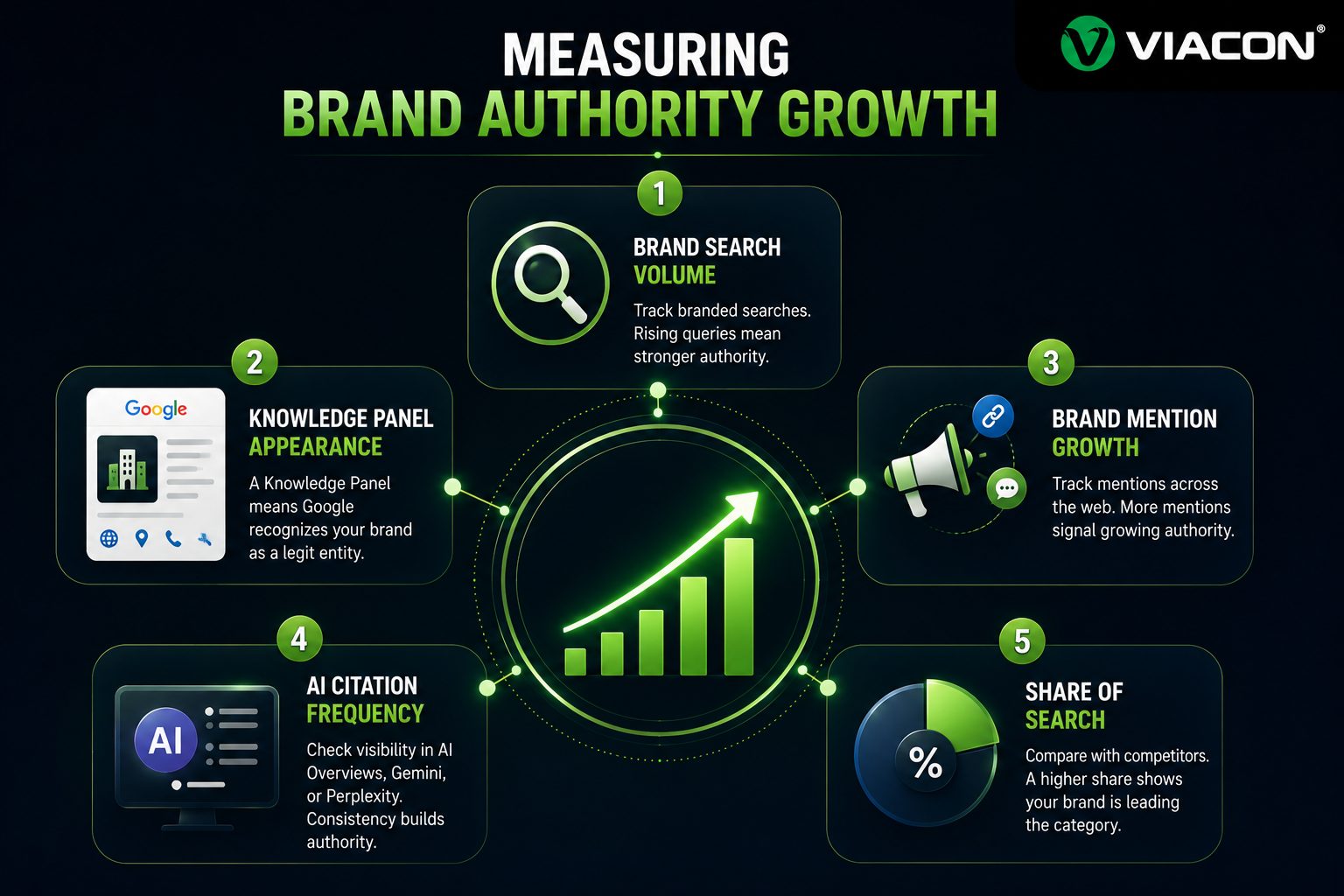
- Brand Search Volume: Track how many people search for your brand by name. Growth in branded queries is one of the clearest signs your authority is improving.
- Knowledge Panel Appearance: Once a Knowledge Panel shows up for your brand, that’s Google formally recognizing you as a legitimate entity.
- Brand Mention Growth: Track mentions across the web, linked and unlinked. An upward trend means your digital PR and content work is landing.
- AI Citation Frequency: Check whether your brand appears in AI Overviews, Gemini, or Perplexity responses. This matters more each month.
- Share of Search: Compare your brand’s search volume to competitors’. A growing share in your category is a reliable indicator of rising authority.
Why Brand Authority Will Outperform SEO
Brand authority will outperform SEO. That’s not a prediction; that’s happening right now. Keywords are relevant. But Google’s knowledge Graph has matured enough and will continue to take the helm of how search queries are answered. It’s high time for your brand to get embedded in it.
Strategize beyond keyword optimization and focus on building a brand entity to have compounding benefits on the search engine.
The primary signals for ranking and visibility on Google are trust and authority. The brands that invest in entity-building now will dominate AI search citations while keyword-only competitors scramble to catch up.
Unsure If Your Brand Is An Entity?
Book a consultation with Viacon’s SEO team for an Entity Audit.
Frequently Asked Questions:
A: How Google evaluates your brand’s trustworthiness and recognition across the web, your full digital footprint, including mentions, profiles, and consistency of information.
A: Through entity recognition, brand mentions, NAP consistency, E-E-A-T signals, Knowledge Graph connections, and presence on trusted platforms like LinkedIn, Wikidata, and Crunchbase.
A: Yes. Both linked and unlinked mentions contribute to entity recognition and brand authority, which indirectly improves rankings and AI search visibility.
A: Build consistent entity signals: clean brand information across platforms, authority profiles, structured data, original research, and citations from trusted sources that AI systems reference.