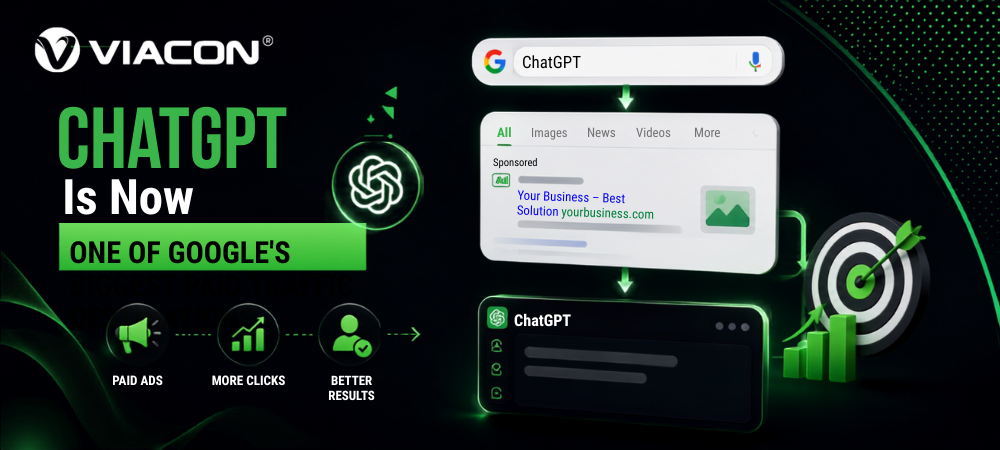
People pay Google to reach ChatGPT. That sounds backward. Google and OpenAI compete for the same search intent. Yet a large study of real user behaviour shows this happens at scale.
iPullRank examined 13.1 billion Google search events from 9.1 million opted-in users between October 2024 and December 2025. ChatGPT ranked as the sixth-most-clicked destination overall. Only YouTube, Google’s own properties, Reddit, Facebook, and Wikipedia ranked higher. Among those top destinations, ChatGPT recorded the highest share of paid clicks.
Two results stand out for anyone running Google Ads or SEO.
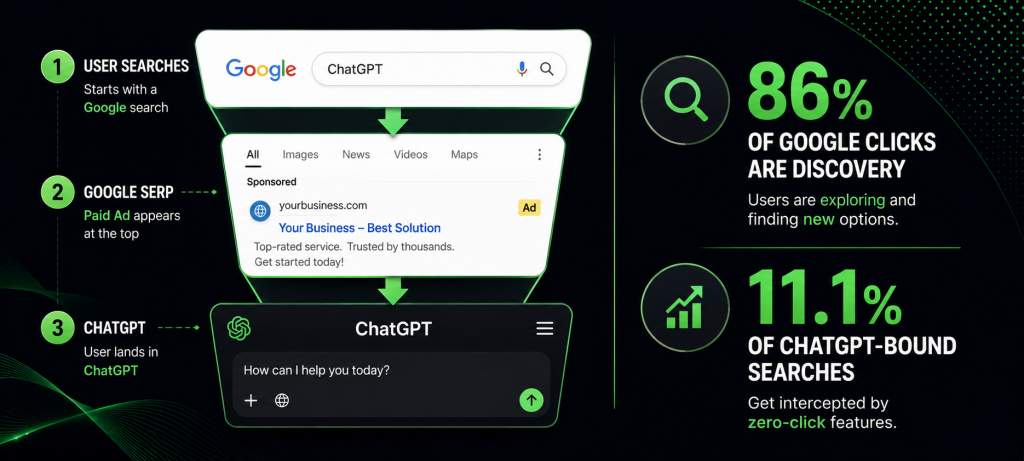
Google intercepts only about 11.1% of searches headed toward ChatGPT with its own zero-click features. That ranks among the lowest interception rates in the study. Most of these queries are navigational. Someone typing “ChatGPT” wants to open the tool, not read a summary about it.
Paid clicks stayed essentially flat across the 15-month window. Organic click share dropped roughly 2.8 points while zero-click results rose about 2.6 points. The traffic lost to AI summaries came almost entirely from organic listings, not ads.
Why People Click Paid Ads To Reach An AI Tool
Branded and navigational searches convert higher on paid ads. In the same dataset, 4.4% of branded clicks were paid versus 3.3% for non-branded. Brands bid on their own names to keep competitors or lookalike sites from intercepting that traffic.
OpenAI appears to follow the same pattern. A paid placement at the top of results for “ChatGPT” helps ensure the click reaches the real product. The study does not reveal OpenAI’s exact queries or spend, so we cannot confirm the full strategy. The broader data on branded search, however, makes defensive bidding a logical and common practice.
Any brand whose name people type into Google regularly should treat its own branded terms the same way. Ranking organically for your company or product name does not remove the risk of someone else capturing that click.
Zero-click Growth Hits Organic Harder Than Paid
The rise in zero-click results has so far landed almost entirely on organic listings. Paid placements have proven more resilient in this dataset. That does not make paid search immune going forward. It does mean moving budget out of paid search solely because of AI Overviews is not supported by the numbers we have.
Discovery still drives most Google behavior. Only about 14% of clicks go to a destination the searcher named directly. The remaining 86% are discovery clicks, with Google introducing people to sites they did not request by name.
How To Measure The Overlap In Your Own Data?
Most teams still struggle to separate traffic that arrives from AI tools versus traditional search journeys. Google Analytics 4 now includes a dedicated AI Assistant channel. It isolates visits from ChatGPT, Gemini, Claude, and similar tools. Set this up if it is not already active.
Once the channel appears, compare it against your paid campaigns that target your own brand name and close competitor terms. High-intent navigational traffic often benefits from the same defensive approach visible in the ChatGPT data.
SEO And Paid Search Need Shared Research
The old split SEO owns organic, PPC owns ads does not hold when AI discovery sits across both. A user can see a brand mentioned in an AI answer, search the name on Google out of habit, and finish the journey by clicking a paid ad.
Content that feeds AI Overviews and chatbot answers and the keywords your paid campaigns target should come from the same research. A combined view of generative engine visibility and paid search lets you catch queries where AI tools already cite competitors and fill the gap with paid campaigns while longer-term organic and GEO work catches up.
Quarterly budget conversations between SEO and PPC teams surface overlaps neither side sees working alone, especially around branded terms and high-intent navigational queries.
Three Moves That Matter Now
Confirm you bid on your own brand name, especially if the product or company name could also function as a generic search term.
Activate the GA4 AI Assistant channel this week. Every month without it leaves traffic untracked.
Pull the last quarter of branded search performance. Check whether paid clicks on navigational, high-intent terms receive enough budget relative to how well they convert.
If you want a clear picture of how your brand currently appears across Google Search, AI Overviews, and AI assistants and where the gaps cost traffic you are already close to earning claim your free digital audit.
The line between search and AI was never as clean as the industry treated it. This data simply makes the overlap impossible to ignore.