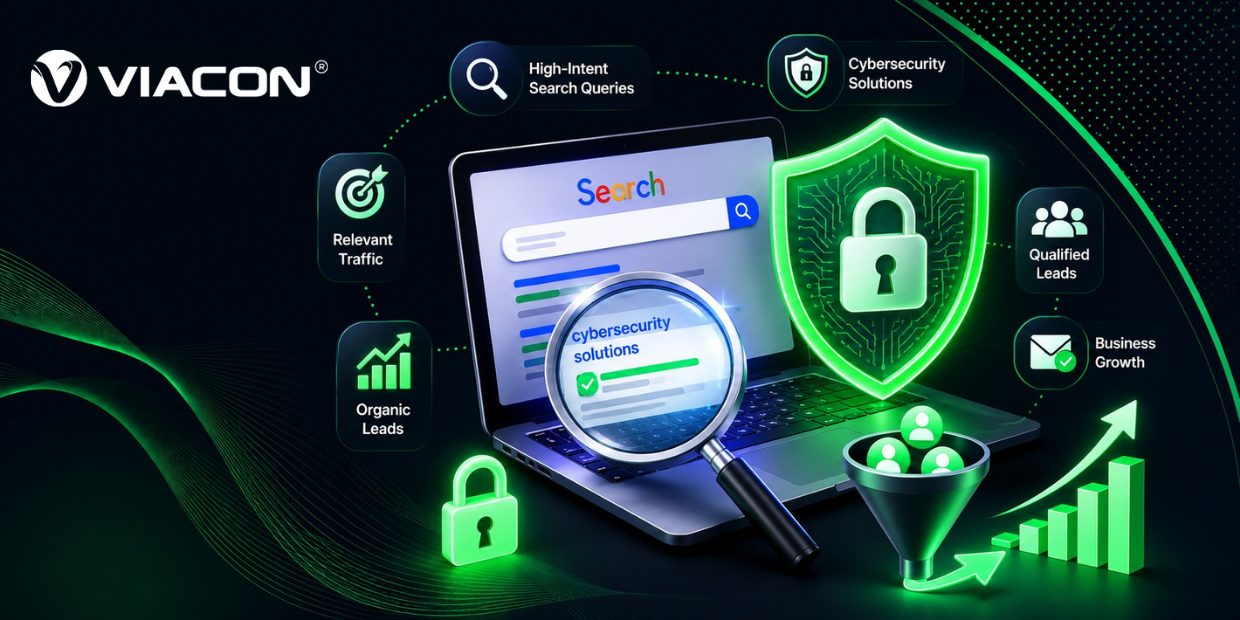
The global cybersecurity market is valued at over $280 billion in 2026, fueled by the rise of AI-powered attacks, ransomware, zero-day exploits, and mounting regulatory pressure. But here’s the challenge: growth in demand hasn’t automatically translated into growth in pipeline for most cybersecurity companies.
Why? Because cybersecurity buyers are meticulous. Research shows they consume 13+ pieces of content before speaking to a vendor. Trust outweighs features. Reputation precedes the sales call. And over 85% of all B2B buyer research begins with a Google search.
This is where cybersecurity SEO becomes your most powerful growth lever.
Unlike paid advertising, where visibility disappears the moment your budget runs out, a well-executed cybersecurity SEO strategy builds compounding authority. Evergreen pages like “What is Zero Trust?” or “Ransomware Protection Guide” generate consistent, qualified traffic for months or years after they’re published.
In this guide, we break down exactly how cybersecurity companies can align their SEO strategy with real buyer intent, close content gaps, and convert organic search traffic into high-quality leads.
What Is Cybersecurity SEO And Why Is It Different?
Cybersecurity SEO is the practice of optimizing a cybersecurity company’s website and content to rank higher in search engine results for queries that security buyers, IT professionals, CISOs, and compliance managers are actively searching.
It Differs From Standard SEO In Several Important Ways:
- YMYL Classification: Google treats cybersecurity content as “Your Money or Your Life” (YMYL), meaning it applies stricter quality standards and E-E-A-T (Experience, Expertise, Authoritativeness, Trustworthiness) criteria before ranking your pages.
- Complex Audience: Your content must resonate with both technical audiences (security engineers, SOC analysts) and executive decision-makers (CISOs, CTOs, compliance officers) who have very different search behaviours.
- Long Buying Cycles: Enterprise cybersecurity sales cycles can span 6–18 months, requiring content at every stage of the funnel from awareness to evaluation to vendor selection.
- High Competition: Global vendors, niche specialists, and well-funded SaaS companies are all competing for the same high-intent keywords.
Cybersecurity companies that invest in a structured digital marketing strategy paired with strong SEO consistently outperform those relying solely on paid ads and outbound sales.
The Most Searched Cybersecurity Queries In 2026
Understanding what your buyers actually search for is the foundation of effective cybersecurity SEO. Based on current search trends, cybersecurity queries fall into four main intent categories:
1. Problem-Aware Queries (High Volume, Top-of-Funnel)
These are searches from people trying to understand a threat or challenge:
- “What is ransomware?”
- “How does phishing work?”
- “Zero trust security explained”
- “AI threat detection”
- “Types of cyber attacks”
- “What is a data breach?”
| Opportunity: Create clear, expert-led educational content targeting these queries. These build awareness and earn backlinks from industry publications. |
2. Solution-Aware Queries (Mid-Funnel, High Intent)
These come from buyers actively evaluating options:
- “Best cybersecurity software for SMBs”
- “Cloud security solutions”
- “Managed security service provider”
- “Endpoint detection and response tools”
- “Zero trust implementation”
- “SIEM vs SOAR”
| Opportunity: Build comparison guides, solution pages, and buyer’s guides that position your services or platform as the answer. |
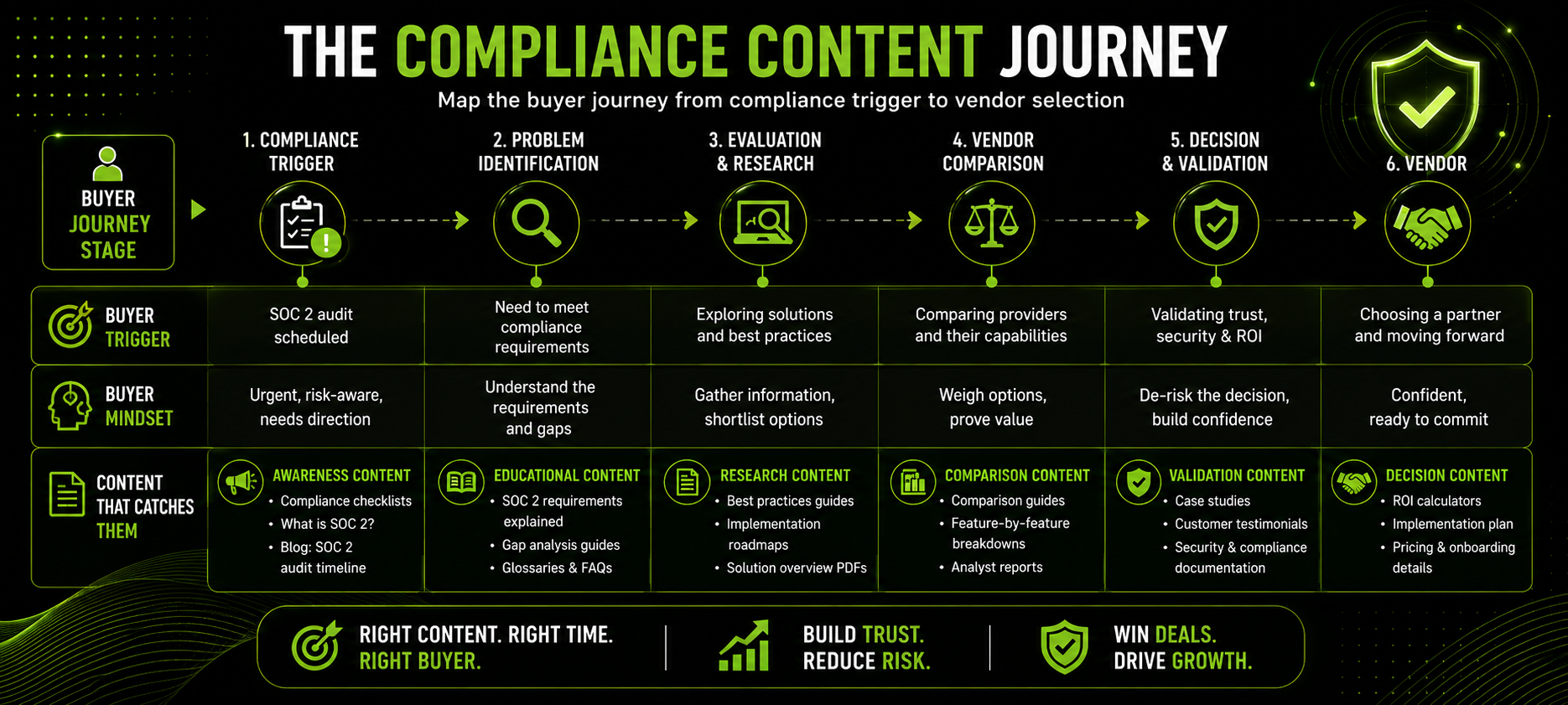
3. Compliance & Regulatory Queries (Highly Commercial)
Compliance-driven buyers are often closest to purchase:
- “GDPR cybersecurity compliance”
- “ISO 27001 consulting”
- “HIPAA IT security solutions”
- “SOC 2 readiness guide”
- “NIST framework implementation”
| Opportunity: Dedicated landing pages combining keyword optimization with compliance-specific CTAs convert at significantly higher rates. Viacon’s Content Marketing Services can help structure these pages for both rankings and conversions. |
4. Local & Niche Queries (Fast-Ranking, High-Quality Leads)
- “Cybersecurity services near me”
- “Penetration testing companies in [city]”
- “Managed IT security for healthcare [region]”
| Opportunity: Geo-targeted landing pages can rank quickly and drive high-intent local leads. One MSSP that created city-specific pages and compliance content saw 70% more leads within six months. |
The 7 Pillars Of A Winning Cybersecurity SEO Strategy
Cybersecurity SEO isn’t a single tactic; it’s a system. Ranking consistently and generating qualified leads requires getting multiple things right at once. Specifically, that means the right keywords, the right content structure, a technically sound website, credible backlinks, and a conversion path that turns visitors into pipeline.
The seven pillars below represent the core components of a strategy that works long-term. Use them to audit where you stand today and identify where the highest-leverage opportunities are for your business.
Pillar 1: Intent-First Keyword Research
Most cybersecurity SEO fails because marketers start with keyword tools instead of buyer problems. Your audience doesn’t search for “cybersecurity services”; they search when something breaks, fails, or needs to be explained to leadership.
The Right Approach:
- Listen to support tickets, sales calls, and customer objections.
- Map keywords to buyer stages: awareness → consideration → decision.
- Prioritize long-tail queries like “EDR for remote workforce” or “ransomware recovery plan for small business”.
- Track commercial intent keywords: “SOAR platform,” “threat intelligence software,” “cybersecurity audit for fintech”.
Buyer language alone isn’t enough anymore. Cybersecurity content that references recognized frameworks earns trust faster and gets cited more often in AI-generated answers, because it signals the writer actually understands the domain rather than paraphrasing a listicle.
Frameworks Worth Anchoring Content To:
- NIST Cybersecurity Framework (CSF): Useful for compliance-adjacent and enterprise buyer content
- MITRE ATT&CK: Relevant for threat-detection, SOC, and incident-response content aimed at technical buyers
- CIS Controls: Strong fit for SMB-focused security content and benchmarking guides
You don’t need to reference a framework in every article. Use them where they genuinely support the point — a SOAR comparison page benefits from a MITRE ATT&CK mention; a “what is ransomware” explainer doesn’t need one forced in.
| Need Help Identifying Your Highest-ROI Cybersecurity Keywords? Viacon’s SEO Services include full-funnel keyword mapping tailored for B2B cybersecurity companies. |
Pillar 2: E-E-A-T Optimization (Non-Negotiable For Cybersecurity)
Google applies rigorous E-E-A-T standards to cybersecurity content.
To Earn And Sustain Rankings, You Need:
- Clear Authorship: Every article should display the author’s name, credentials, and a link to their bio.
- Cited Sources: Reference CISA, NIST, Dark Reading, Threatpost, or peer-reviewed publications.
- Original Insights: Proprietary data, client case studies, threat reports, or expert commentary not rephrased competitor content.
- Trust Signals On-page: Security badges, certifications, client logos, and clear privacy policies.
B2B companies that blog consistently with expert-attributed content generate 67% more leads per month than those that don’t.
| Does Cybersecurity Content Need To Reference Frameworks Like NIST Or MITRE ATT&CK To Rank? Not always, but it helps. Referencing recognized frameworks such as NIST CSF, MITRE ATT&CK, or CIS Controls signals real domain expertise to both readers and search engines, which matters heavily for YMYL content. Use them where they add genuine value to the piece rather than as a checkbox. For guidance on building this kind of authority-first content, see Viacon’s content marketing services. |
Pillar 3: Content Architecture That Scales
Structure your content to serve multiple audiences and search intents simultaneously:
Recommended Structure For Cybersecurity SEO:
| Content Type | Purpose | Example |
|---|---|---|
| Pillar Pages | Rank for broad head terms | “Ultimate Guide to Zero Trust Security” |
| Topic Cluster Posts | Support pillar, capture long-tail | “Zero Trust vs VPN: What’s the Difference?” |
| Comparison Pages | Mid-funnel, high conversion | “Best EDR Tools for Enterprise 2026” |
| Compliance Guides | Highly commercial | “HIPAA Cybersecurity Checklist for Healthcare IT” |
| Threat Intelligence Pages | Authority & backlinks | “Top Ransomware Families in 2026” |
| Local Landing Pages | Geo-targeted leads | “Managed Security Services in Chicago” |
In practice, this pillar-and-cluster model a central page supported by clusters of in-depth articles is how cybersecurity companies build topical authority that Google rewards with consistent rankings.
Viacon’s Programmatic SEO Services can help you deploy this architecture at scale, particularly for compliance pages and local landing pages.
Pillar 4: Technical SEO For Cybersecurity Websites
Cybersecurity websites face unique technical SEO challenges:
- Site Speed: Heavy documentation pages, code blocks, diagrams, and JS components hurt Core Web Vitals, a direct ranking factor
- HTTPS And Security Signals: Google uses HTTPS as a ranking signal. Your site’s security posture directly affects organic visibility
- Crawlability: Strict firewalls or CDN security configurations can inadvertently block Googlebot
- Content Freshness: Threat updates, CVE notices, and compliance changes pile up quickly; stale pages lose rankings
Quick Wins:
- Run a full technical audit using Screaming Frog and Google Search Console.
- Prioritize Core Web Vitals (LCP, CLS, FID).
- Implement schema markup for articles, FAQs, and how-to content.
- Ensure all gated resources are crawlable but not indexed unnecessarily.
Get A Free Technical SEO Audit For Your Cybersecurity Website
Request Your AuditPillar 5: Link Building That Builds Real Authority
In cybersecurity, backlink quality matters far more than quantity. A single citation from Dark Reading or CISA outweighs dozens of low-relevance links.
High-impact Link Building Tactics:
- Original Threat Research: Publish annual or quarterly threat reports with proprietary data. As a result, these consistently earn citations from Forbes, CISA, and trade publications without outreach.
- CVE Content: Create white-hat, educational pages around CVE reports and exploit breakdowns, which are actively searched by security professionals and frequently linked.
- Guest Articles: Contribute expert commentary to TechCrunch, SearchEngineLand, Infosecurity Magazine, or SC Media.
- Community Participation: Active engagement on LinkedIn, Reddit (r/netsec, r/cybersecurity), and security forums builds brand authority and surfaces content ideas
One SaaS company focused on cloud protection earned backlinks from TechCrunch and Search Engine Journal through original “Best Practices” guides, resulting in 150% organic traffic growth within a year.
Pillar 6: Conversion Rate Optimization Turning Traffic Into Leads
Ranking is only half the job. Converting cybersecurity buyers requires:
- Trust Signals Above The Fold: Certifications, compliance logos, and client names
- Clear, Low-friction CTAs: “Get a Free Security Assessment,” “Download the Threat Report,” or “Talk to a CISO-level expert”—not generic “Contact Us”
- Lead Magnets: Free compliance checklists, threat reports, ROI calculators, and security scorecards capture leads at every funnel stage
- Case Studies: Detailed before/after narratives showing measurable security outcomes (e.g., “Reduced incident response time by 60%”)
Viacon’s CRO & Funnel Optimization services are specifically designed to increase the conversion rate of SEO-driven traffic, turning page visits into a qualified pipeline.
Pillar 7: Measurement And Iteration
Effective cybersecurity SEO is measured in business outcomes, not just traffic:
Key Metrics To Track:
- Demo requests and sales-qualified leads from organic traffic.
- Traffic value (what equivalent paid clicks would cost).
- Pipeline contribution from SEO.
- Time-to-conversion for organic leads.
- Rankings for priority commercial keywords (e.g., “SOAR platform,” “threat intelligence software”).
- Organic traffic by intent: top-of-funnel educational vs. bottom-of-funnel product pages.
Use Google Analytics 4, Google Search Console, and your CRM to connect organic sessions to actual revenue. Avoid vanity metrics; impressions and traffic volume only matter if they contribute to leads.
What Most Cybersecurity Companies Are Missing?
Comparing top-ranking cybersecurity content with what most companies publish reveals clear, exploitable gaps:
Gap 1: AI And Emerging Threat Content: Queries around “AI phishing detection,” “deepfake security threats,” and “LLM security risks” are growing fast with relatively low competition. Few cybersecurity brands have published authoritative content here yet.
Gap 2: Industry-Specific Compliance Content: Generic compliance guides don’t rank. In contrast, industry-specific pages ‘HIPAA cybersecurity for telehealth,’ ‘GDPR compliance for SaaS companies,’ ‘PCI DSS for e-commerce’ are underserved and, as a result, convert at high rates.
Gap 3: Buyer Persona-Specific Content. Most cybersecurity content is written for “security professionals” generically. Pages tailored specifically to CISOs, compliance officers, or SMB owners perform significantly better for both rankings and conversions.
Gap 4: Video And Interactive Content: Infographics, explainer videos, and interactive ROI calculators are rare in cybersecurity SEO, yet they earn strong backlinks and dwell time signals. An infographic on “Top 10 Cyber Threats in 2026” can gain significant traction on LinkedIn and industry publications.
Gap 5: AEO/GEO Optimization (Answer Engine Optimization): As AI-powered search tools like ChatGPT, Perplexity, and Google AI Overviews change how buyers research vendors, cybersecurity companies need to optimize for LLMs alongside traditional search. Viacon’s AI Search Optimization (GEO) service is purpose-built for this emerging frontier.
Gap 6: What Most Cybersecurity Companies Are Missing? Most cybersecurity content stops at the category level: “endpoint security,” “cloud security,” “compliance.” Buyers searching Google are usually further along than that. They’re dealing with a specific operational problem and typing it in almost verbatim.
Underserved Examples Worth Targeting:
- “SOC alert fatigue” and how it leads to missed detections.
- Security implications of OT/IT convergence in manufacturing.
- Identity sprawl across dozens of SaaS applications.
- Vendor consolidation fatigue in mid-market security stacks.
These queries carry lower search volume than head terms, but the searchers are closer to a buying decision, and almost no cybersecurity brand is writing for them directly. If you have verified results from campaigns built around this kind of granular targeting, our case studies page is the right place to point prospects who want proof before they commit.
| How Does AI Overview And Zero-click Search Change Cybersecurity Content Strategy? AI Overviews increasingly answer top-of-funnel cybersecurity questions directly in the search results, so a page that only targets awareness-stage keywords may get summarized without earning a click. The fix isn’t to abandon top-of-funnel content: it’s to structure it so AI systems can cite it cleanly (clear definitions, direct answers near the top) while reserving your strongest CTAs and lead magnets for the mid- and bottom-funnel pages buyers still click through to evaluate vendors. |
Cybersecurity SEO Tools Stack
| Tool | Purpose |
|---|---|
| Ahrefs | Competitor keyword gaps, backlink analysis |
| SEMrush | Rank tracking, content gaps, site audits |
| Google Search Console | Indexing health, query data, Core Web Vitals |
| Screaming Frog | Technical site audits, broken links |
| PageSpeed Insights | Core Web Vitals, performance optimization |
| Google Analytics 4 | Traffic analysis, conversion attribution |
| Hotjar | Heatmaps, user behavior analysis |
| Cloudflare | Security + performance (CDN) |
How To Choose The Right Cybersecurity SEO Agency?
Not every SEO agency understands the nuances of cybersecurity marketing. When evaluating a partner, look for:
- Industry Understanding: Can they write convincingly for a CISO audience? Do they know what a SOC, EDR, or SIEM is?
- Technical SEO Expertise: Do they understand Core Web Vitals, schema markup, and crawlability for complex security sites?
- Content Authority: Do they have a process for creating E-E-A-T-compliant content with real expert attribution?
- Revenue-focused Reporting: Do they track pipeline contribution, not just rankings and impressions?
- Full-funnel Alignment: Is SEO integrated with your broader demand generation strategy?
Viacon Works With Cybersecurity Companies To Build SEO Programs That Drive Qualified Pipeline Not Just Traffic.
Talk To Our TeamGeo-Search Demand: Turning Local Search Into Organic Leads
Local and regional search intent represents one of the fastest-ranking opportunities in cybersecurity SEO. Specifically, buyers searching ‘cybersecurity company near me’ or ‘penetration testing firms in [city]’ are often further along in the buying cycle.
Tactics For Capturing Local Cybersecurity Search Demand:
- City-specific Landing Pages targeting “managed security services in [city]” or “cybersecurity consulting for [industry] in [region]”
- Google Business Profile Optimization with correct category, services, and consistent NAP (Name/Address/Phone)
- Local Review Strategy: Gather reviews from enterprise clients and case studies from regional deployments
- Local Content: Publish guides specific to local compliance laws or industry regulations in your target regions
One MSSP that combined these tactics saw a 70% increase in leads and a top-3 local map ranking within six months.
The ROI Case For Cybersecurity SEO
Cybersecurity SEO contracts with specialized agencies typically range from $3,000 to $10,000 per month, but the ROI case is strong when measured properly:
- Compounding Returns: Unlike PPC, organic rankings continue generating leads without per-click costs
- Qualified Traffic: Buyers who find you through search are already problem-aware and actively evaluating solutions
- Pipeline Efficiency: Content that educates early in the buying cycle shortens sales cycles and reduces CAC
- Brand Authority: Consistent top-of-SERP presence signals market leadership to prospects before they ever contact you
B2B companies in cybersecurity that invest in SEO for 12+ months consistently report organic becoming their #1 or #2 source of qualified inbound leads.
Cybersecurity SEO Is A Long-Term Growth Asset
Today, in 2026, cybersecurity buyers are more self-directed, more skeptical of vendor claims, and more dependent on organic search than ever before. A strong cybersecurity SEO strategy isn’t just a marketing tactic. It’s a compounding business asset. It reduces dependency on paid media, builds brand authority, and generates qualified pipeline month after month.
The Companies Winning In Organic Search Right Now Are Doing Three Things Well:
- Creating content that mirrors real buyer intent, not just keyword lists.
- Building topical authority through structured pillar-and-cluster content architecture.
- Integrating SEO with broader digital marketing services for a full-funnel approach.
Whether you’re a cybersecurity SaaS company, an MSSP, or a consulting firm, the question isn’t whether SEO is worth the investment. Rather, it’s whether you can afford not to
To that end, Viacon specializes in SEO and content marketing for B2B technology companies, including cybersecurity. Specifically, from keyword strategy and content creation to technical optimization and conversion rate improvement, we help cybersecurity brands build the organic presence that consistently drives qualified leads.